Why averaging averages can be wrong: find the denominator first
This article was translated from its source language with AI assistance. Please check technical terms and equations against the original.
If two classes average 80 and 60, is their combined average 70? Only under the right weighting. When the first class has 10 students and the second has 30, the student-level average is 65. Combining group summaries requires knowing how many observations each summary represents. Percentages and unit prices have the same hidden-denominator problem.
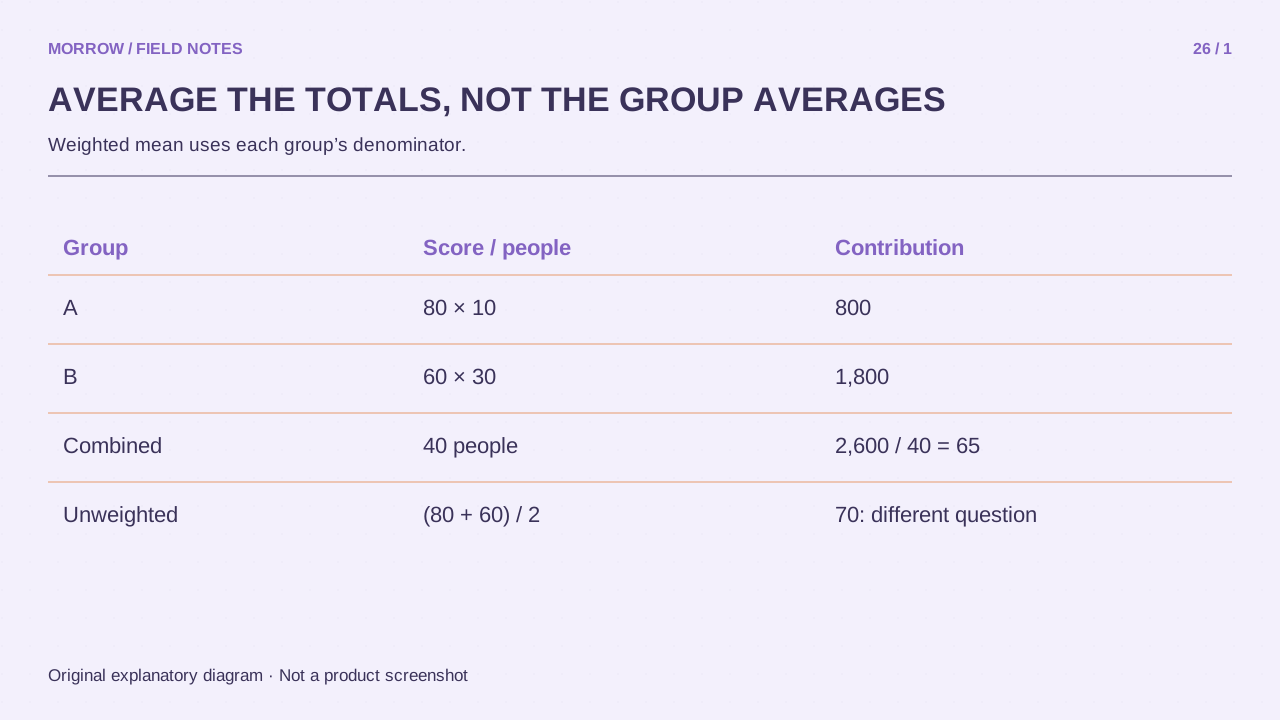
Rebuild the totals behind the class averages
Use this invented example. Class A has 10 students averaging 80, so its score total is 800. Class B has 30 students averaging 60, so its total is 1,800. Together they have 2,600 points across 40 students: 2,600 divided by 40 equals 65. Averaging 80 and 60 gives each class equal influence, not each student.
| Group | Students | Average | Total |
|---|---|---|---|
| A | 10 | 80 | 800 |
| B | 30 | 60 | 1,800 |
| Combined | 40 | 65 | 2,600 |
The NIST definition of a weighted mean divides the sum of values multiplied by weights by the sum of the weights. Here the values are class averages and the weights are student counts. The unit you want to represent determines the calculation.
Return percentages to counts
Imagine two stores. A succeeds on 8 of 10 tasks, or 80%. B succeeds on 18 of 30 tasks, or 60%. The pooled success rate is (8 + 18) divided by (10 + 30), or 65%. The simple average of the two percentages, 70%, answers a different question about equally weighted stores.
Without denominators, you cannot reconstruct the exact pooled rate. Rounded percentages can also conceal the original counts. Store successes and total attempts together when possible, and round only for the final display. Check that groups use the same period and definition, and that observations do not overlap unexpectedly.
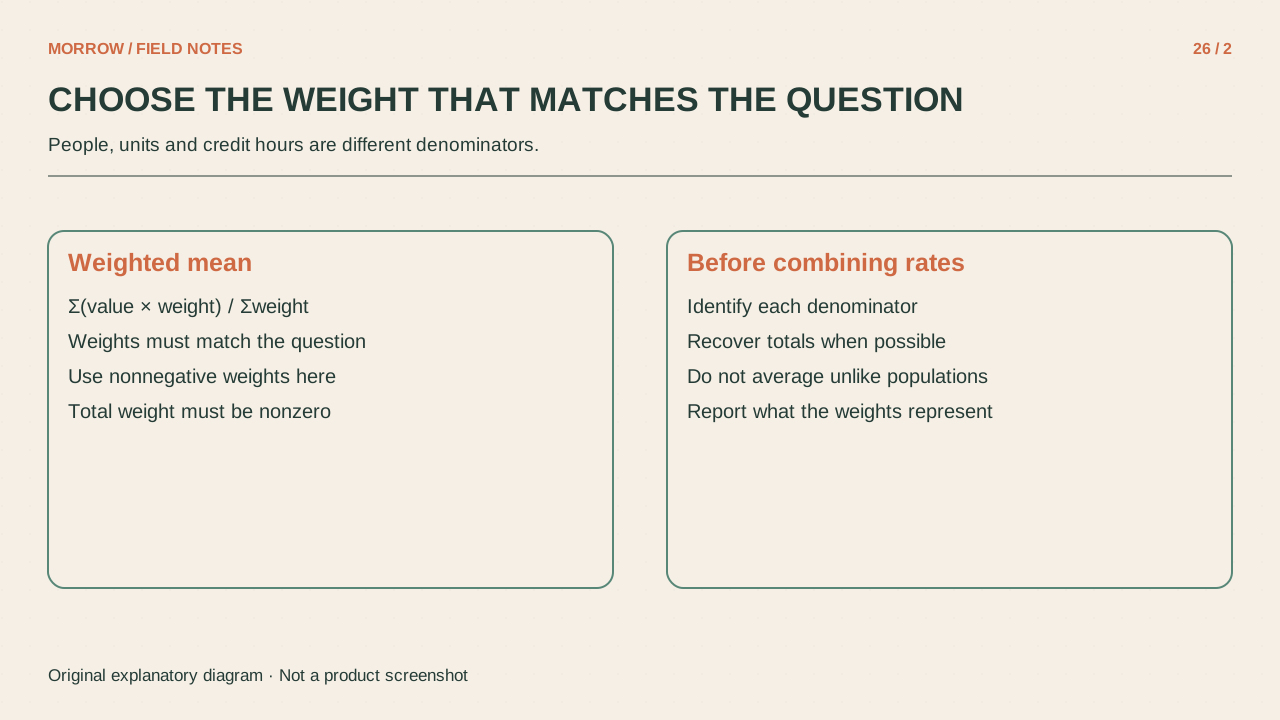
Weights can represent quantities or assessment rules
Mix 2 kg of material priced at 3 units per kilogram with 8 kg priced at 5 units per kilogram. The average unit price is (2 × 3 + 8 × 5) divided by 10, which equals 4.6, rather than the simple average of 4. The weight is kilograms. For an assessment weighting a score of 80 at 30% and 90 at 70%, the result is 80 × 0.3 + 90 × 0.7 = 87. The weights sum to one, so the division is invisible.
Write the meaning before using a tool
NumPy's average documentation uses the same weighted calculation and requires a nonzero sum of weights. For nonnegative weights such as counts, masses and assessment shares, check that the answer lies between the smallest and largest values. That check does not automatically apply to specialized calculations with negative weights.
- Write whether the answer is per person, per task or per group.
- Identify each denominator and the meaning of each weight.
- Check for overlapping observations or missing data.
- Combine actual totals and counts where possible.
- Round at the end and report the denominator.
A simple mean is not always wrong. It suits a question that deliberately treats groups equally. For an average across all people or attempts, choose weights that match those units rather than giving every summary the same influence.
Related practical guides
Original illustrations created to help explain this article.