Mechanics of Materials (Solid Mechanics): Poisson’s Ratio
This article was translated from its source language with AI assistance. Please check technical terms and equations against the original.
Definition
A dimensionless ratio of transverse strain to axial strain when a material is linearly elastic.
Symbol: ν (nu)
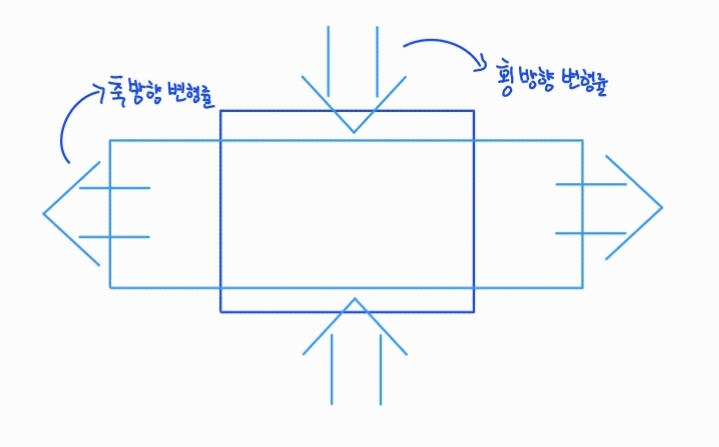
Formula: ν = transverse strain / axial strain = -ε₂ / ε₁
Formula meaning: The minus sign makes Poisson's ratio positive when axial strain is positive and transverse strain negative in tension, or the reverse in compression.
Range of Poisson's Ratio
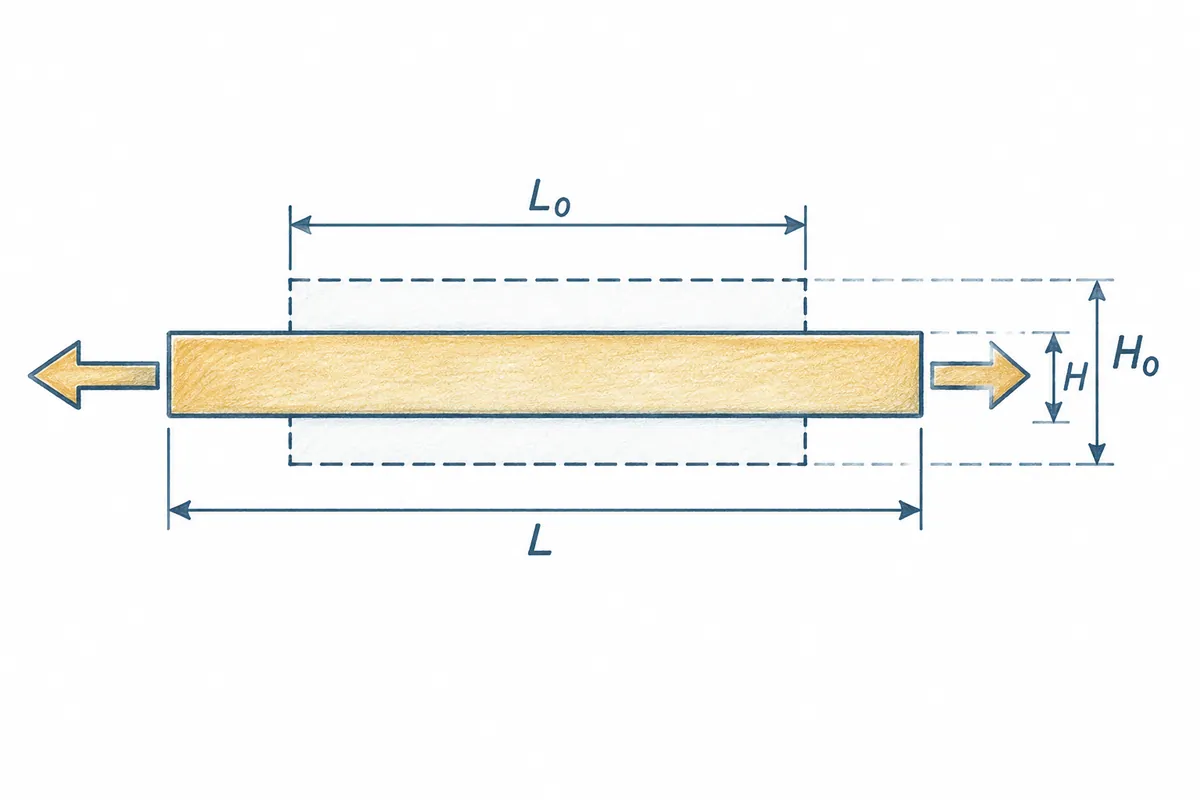
- Ordinary materials: 0.25–0.35; minimum: -1.0 for low-density open-cell polymer foams; maximum: +0.5.
Characteristics
- Positive for ordinary materials.
- Can be negative in special materials such as low-density open-cell polymer foams.
- Remains constant only within the linear elastic range.
Examples
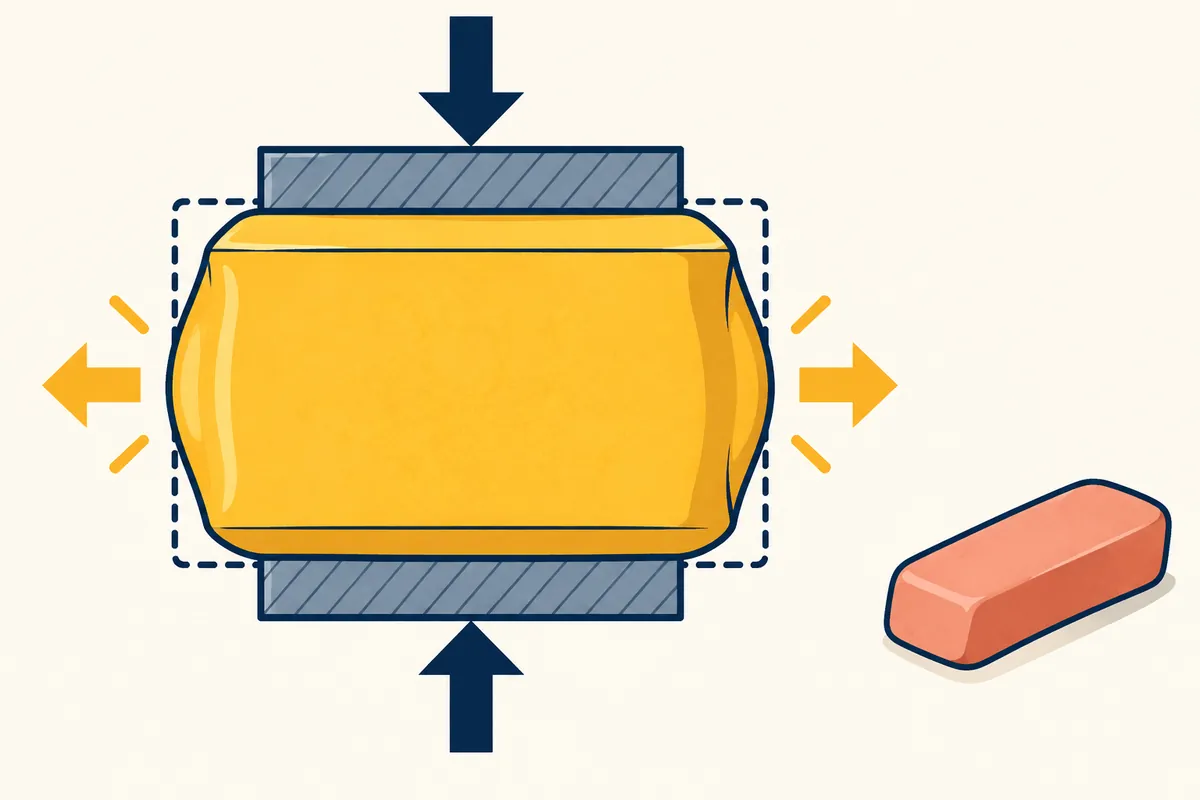
- Most metals: 0.25–0.35.
- Cork: Nearly zero.
- Concrete: Approximately 0.1 or 0.2.
- Rubber: Close to 0.5.
Origin of the Name
Named after French mathematician Siméon Denis Poisson (1781–1840).
Applications
- Calculates transverse strain from axial strain.
- Applies only under uniaxial stress.
Poisson's ratio in the linear elastic range: For a particular material, it remains constant in this range, meaning lateral deformation maintains a constant proportional relationship to axial deformation.
Uniform loading conditions: Additional conditions are needed for constant axial deformation throughout a bar.
Homogeneity: Material must have the same composition and therefore elastic properties at every point.
Anisotropy and isotropy: Elastic properties may differ axially and laterally. Isotropic materials have the same properties in all directions; anisotropic ones vary by direction.
Conditions for uniform Poisson's ratio: For equal lateral deformation throughout a bar, the material must be homogeneous and have identical elastic properties in all directions. Metals often satisfy these conditions.
Original illustrations created to help explain this article.
Original on Tistory ↗