Turn On the Switch for Immediate Action: Introducing Nobutaka Ohira’s Book on Activating a Lazy Brain
This article was translated from its source language with AI assistance. Please check technical terms and equations against the original.
Today, I would like to introduce a self-improvement book.
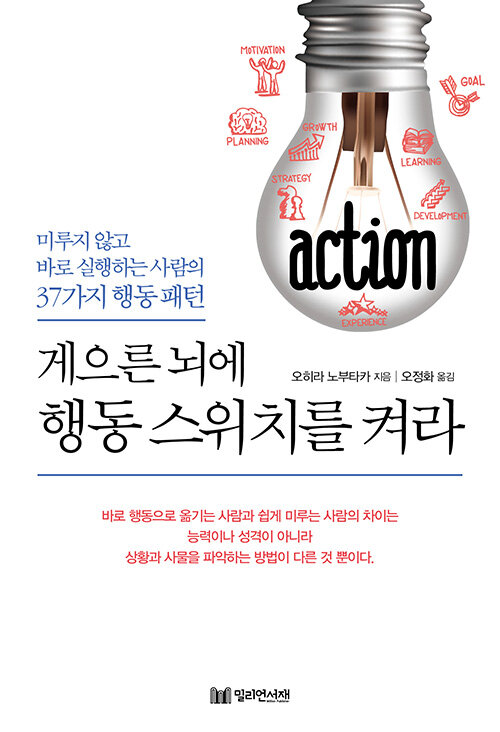
The book is Nobutaka Ohira's Turn On Your Lazy Brain's Action Switch.
We all have things to do but sometimes let them slip because we do not feel like doing them, or put off replying to an email because it feels bothersome. Before we know it, a tremendous amount of work may pile up. In such situations, we may blame ourselves, asking, Why do I always fail? Why can I never get moving? If I had acted then, things would be different now...
This book helps you rediscover your switch for taking immediate action.
According to the book, people who act immediately have something in common.
They naturally and comfortably immerse themselves in work and get moving. They act smoothly without relying on motivation or sheer determination and without forcing themselves.
Then why is it that you cannot get moving immediately? What keeps you from acting is your brain.
When you attempt something new or tackle a difficult problem, a bias toward preserving your current state for survival comes into play.
In other words, if you can get this brain into a state where it wants to act, you can turn your immediate-action switch ON.
The book systematically introduces different ways to turn on that switch.
It offers ways to break out of waiting.
It suggests environments and behaviors that can help us get moving proactively.
In particular, it encourages you to start with small actions and gradually take more and more action. (Featuring dopamine.)
In this way, you can achieve changes, results, and feedback. You can move toward realizing your dreams and goals and resolving your worries and problems.
These are the things the book offers and the benefits you can gain from it. Starting with the next post, I will discuss the methods it presents.


Original illustrations created to help explain this article.
Original on Tistory ↗