Know it while reading, forget it later? Try this seven-day retrieval routine
This article was translated from its source language with AI assistance. Please check technical terms and equations against the original.
A highlighted sentence can feel familiar every time you reread it. Close the book, however, and you may struggle to produce the first sentence of an explanation. The useful check is not how often you looked at the page, but whether you can construct an answer without it. Retrieval practice means bringing information to mind; it does not have to be a graded examination.
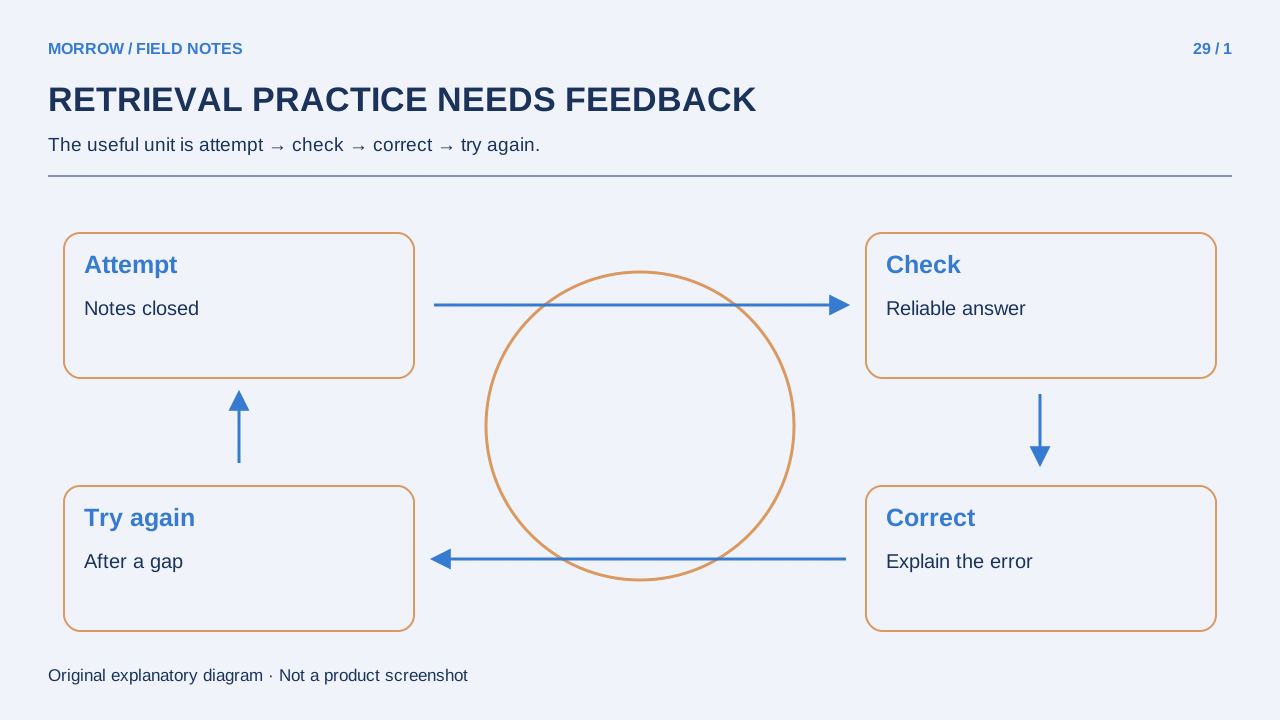
Separate familiarity from producing an answer
Roediger and Karpicke's 2006 experiments compared restudying passages with recall tests and observed an advantage from prior testing on delayed tests. Immediate and delayed results differed. This is a reason to add answering after understanding, not a claim that reading is useless.
Karpicke and Blunt's 2011 experiments found benefits from retrieval practice on later science-text tasks that included comprehension and inference. A particular experimental comparison does not establish one method as universally best. You can organize concepts, study examples and draw diagrams, then check whether you can produce the explanation independently.
Build one ten-minute check
- Read a short section and write three important questions.
- Close the material and answer on a blank sheet.
- Reopen it and mark missing conditions in another color.
- Classify the problem: forgotten information, confused concept or misread question.
- Repair the explanation and answer a fresh question.
Instead of asking only “What is lossless compression?”, also ask, “Does saving an already blurry JPEG in a lossless format restore detail, and why?” This distinguishes recalling a term from using its meaning. Begin with one checkable sentence and a reason, rather than demanding a long essay immediately.
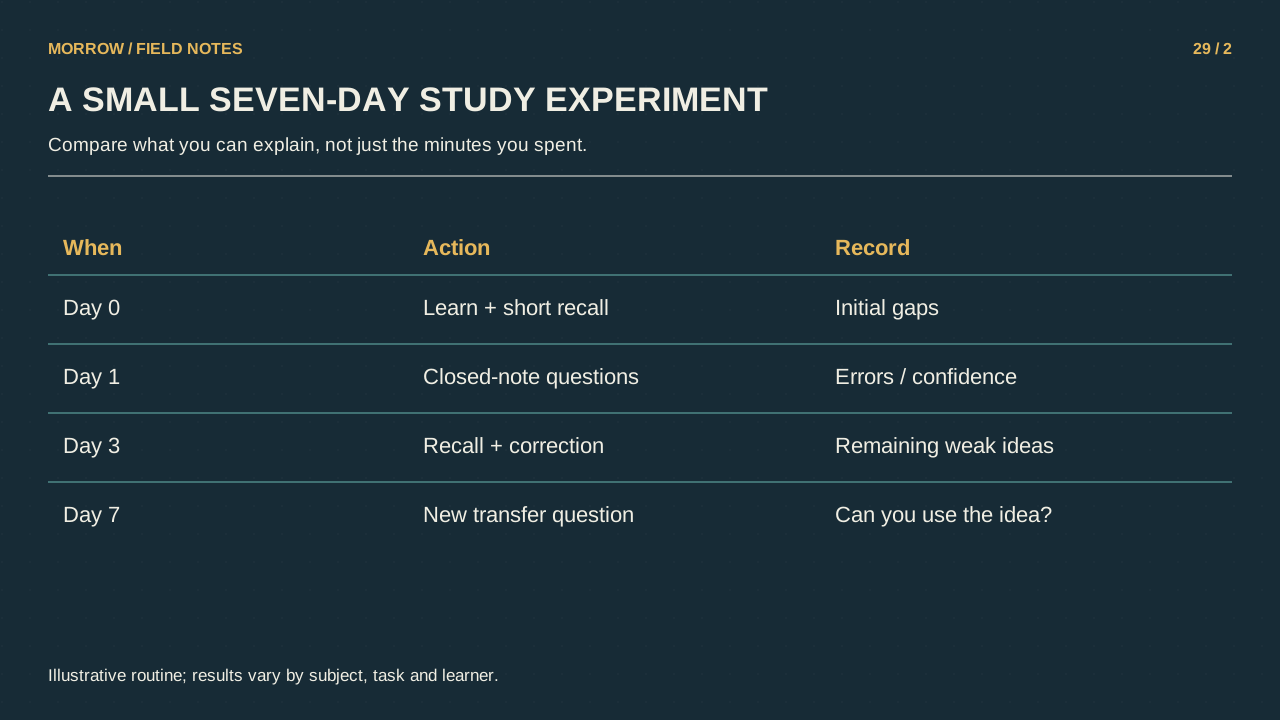
Use an adjustable seven-day routine
The following is an implementation suggestion, not a tested fixed calendar or promised effect size. Change it for your available time and task.
| Day | Main action |
|---|---|
| 1 | Understand the section and prepare questions and answers |
| 2 | Answer without notes and identify omissions |
| 3 | Repair explanations and answer again |
| 4 | Apply the idea to a new example |
| 5 | Solve problems mixing several concepts |
| 6 | Explain why an alternative answer is wrong |
| 7 | Check without notes and choose the next target |
A quiz without checking is incomplete
Repeatedly producing the same wrong answer can leave the misunderstanding uncorrected. Compare your answer with reliable material and repair it. If an item is unknown, revisit the explanation and example rather than simply struggling longer. After checking, produce the answer yourself; do not count copying a visible solution as successful recall.
Track correct explanations, missing conditions and application to new problems instead of recording only a score. You do not need to turn every task into flashcards. Calculation, writing and practical skills also require practicing the relevant performance. Connecting reading with retrieval helps you verify usable knowledge, rather than mistaking the feeling of recognition for the ability to explain and apply an idea later.
Related practical guides
Original illustrations created to help explain this article.