Spaced repetition schedules: use days 1, 3 and 7 as a starting plan
This article was translated from its source language with AI assistance. Please check technical terms and equations against the original.
Does reviewing on days 1, 3 and 7 guarantee the longest-lasting memory? Spacing study sessions has supporting evidence, but no single calendar is a proven optimum for every learner and topic. Use a schedule as a starting tool, then adjust it according to what you can recall and how long you need to retain the material.
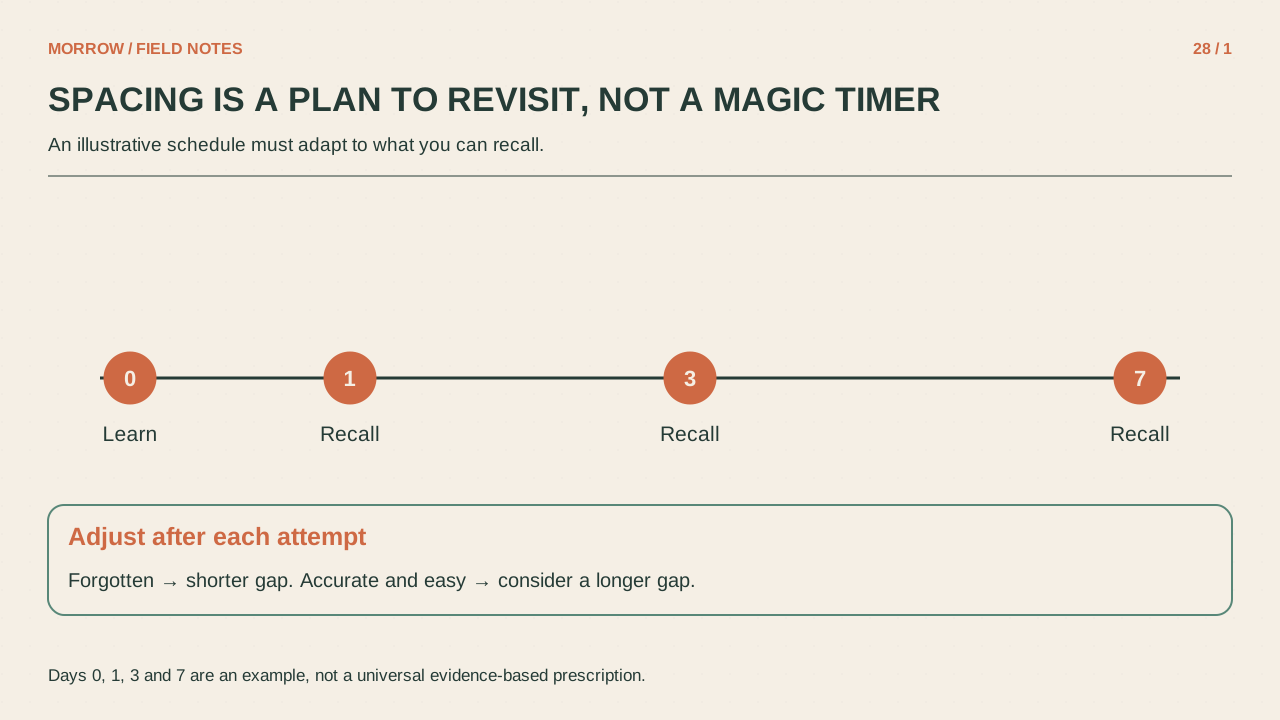
Separate the research principle from an exact calendar
Cepeda and colleagues' 2008 experiment varied study gaps and the delay before a final test, showing that effective spacing relates to the retention goal. Their 2006 distributed-practice synthesis also examines the joint role of those intervals. This supports distributing learning rather than treating the example calendar below as a personalized scientific prescription.
Results from fact and verbal-recall tasks do not automatically specify how to train every practical skill or complete a complex project. The material, initial understanding and date of intended use differ. Empty spaces in a calendar do not guarantee comprehension or performance.
Try a small two-week plan
For convenience, call the first learning session day 0 and plan checks on days 1, 3, 7 and 14. This is an adjustable proposal, not the exact optimum extracted from a study. Start with around ten important concepts rather than an entire textbook. Give each question one clear target, and add a short application problem where using the idea matters.
| Time | Action | Record |
|---|---|---|
| Day 0 | Understand and write questions | Explanation and answer |
| Day 1 | Answer without notes, then check | Immediate, slow or missed |
| Days 3 and 7 | Relearn difficult items | Next review date |
| Day 14 | Apply ideas in mixed problems | Remaining confusions |
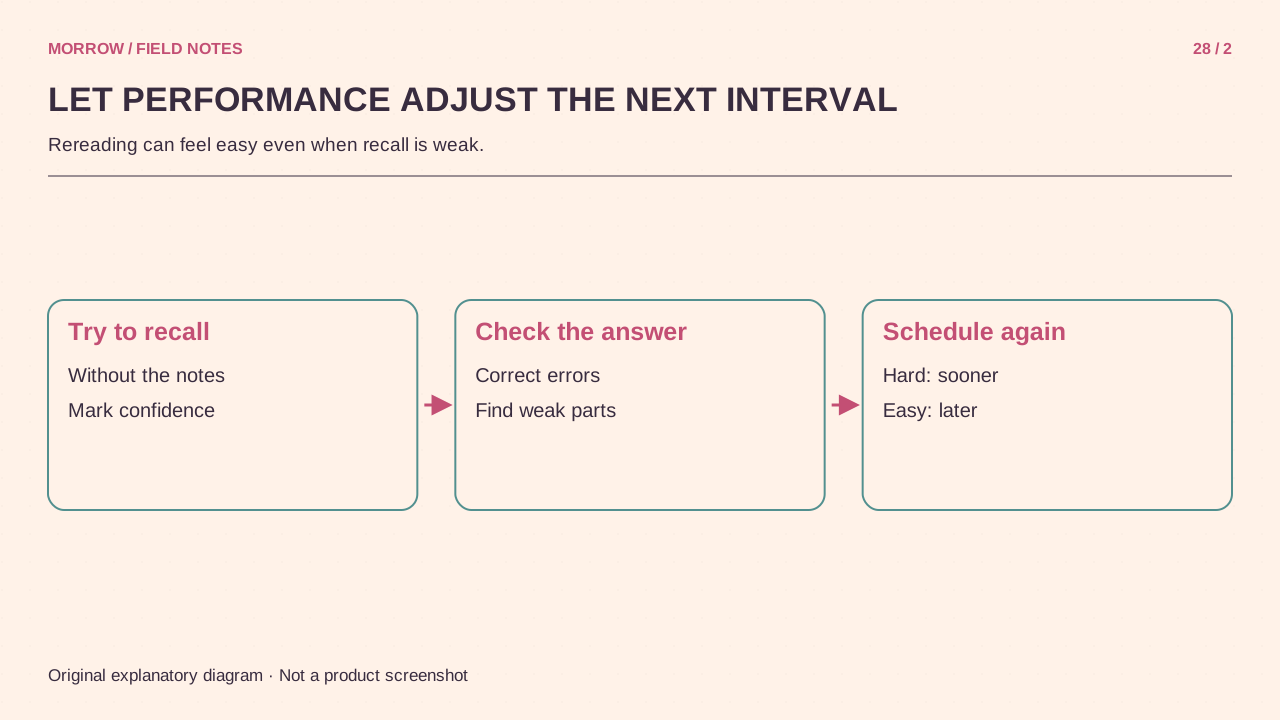
Repair an explanation before extending its gap
If you can answer promptly, consider moving the next check somewhat farther away. If you answer correctly after a struggle, try a similar gap. If you miss it, check and repair the explanation before scheduling an earlier attempt. These categories are management suggestions, not validated universal cutoffs. A difficult feeling alone does not prove that long-term learning improved.
Check whether the question is ambiguous. “Explain this chapter” is harder to assess than “If condition A changes, what happens to result B, and why?” If you can recite an answer but cannot use it in a new problem, add worked examples and application practice rather than simply lengthening the interval.
Keep the review queue manageable
- Reduce new items when accumulated reviews become excessive.
- Mark missed items instead of repeatedly studying only familiar ones.
- After a missed day, assess current recall rather than restarting automatically.
- Add a check before a real deadline or intended use.
- Use an unfamiliar problem after a week to test application.
A useful review schedule is a record that directs the next action, not a perfect prediction of memory. Track attempted answers and corrected explanations, not just dates for rereading. Managing spacing, understanding and opportunities to produce an answer together makes it easier to see what your study time actually changed.
Related practical guides
Original illustrations created to help explain this article.