Metallic Materials: Properties and Related Terminology
This article was translated from its source language with AI assistance. Please check technical terms and equations against the original.
Today, we will examine the properties of metallic materials. Metals have various physical, mechanical, chemical, and manufacturing-related properties. The following explains them in detail.
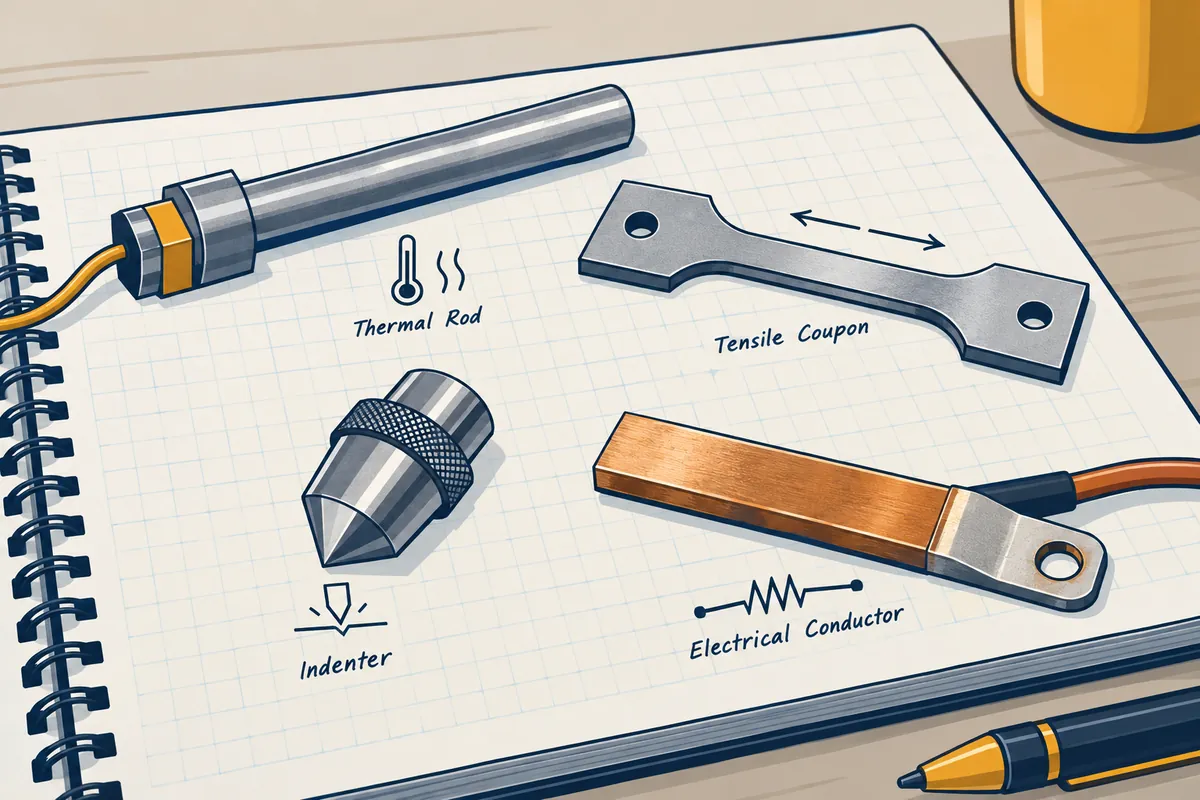
1. Physical Properties
- Specific gravity: A value representing the density of a metallic material.
- Melting point: The temperature at which a metal changes from solid to liquid. For example, tungsten (W) has a melting point of 3410°C, and mercury (Hg) has a melting point of -38.8°C.
- Specific heat: The ability to absorb or release thermal energy per unit mass.
- Coefficient of linear expansion: A value representing how much a metallic material expands with a change in temperature.
- Thermal and electrical conductivity: The ability of a metallic material to transfer heat and electricity. In general, silver (Ag), copper (Cu), gold (Au), aluminum (Al), magnesium (Mg), zinc (Zn), nickel (Ni), iron (Fe), lead (Pb), and antimony (Sb) are metals with high thermal and electrical conductivity.
- Discoloration of metals: A change in a metallic material's color caused by environmental factors.
- Magnetism: Some metallic materials respond to magnetic fields and can have magnetic force. Heusler alloys (Mn, Al, Cu) and ferromagnetic materials are examples with magnetism.
- Composition, microstructure, and electrical resistance: The composition and microstructure of a metallic material are important factors determining its properties. Its electrical resistance also represents its electrical characteristics.
2. Mechanical Properties
- Ductility, malleability, toughness, and brittleness: These describe the deformation capability and strength of metallic materials.
- Ductility refers to a metallic material's ability to stretch during deformation.
- Malleability is the ability of a metallic material to spread out in the thickness direction under pressure.
- Toughness describes the ability to withstand large deformation without fracturing.
- Brittleness is the tendency of a metallic material to exhibit brittle failure during deformation.
Strength measures the amount of stress a material can withstand without failure.
Stiffness measures a material's ability to return to its original shape after being affected by an external force.
- Other mechanical properties include fatigue limit, creep, elongation, reduction in area, and impact value.
If you would like to learn the definitions or properties related to these terms, see the link below.
https://tiheatanium.tistory.com/9
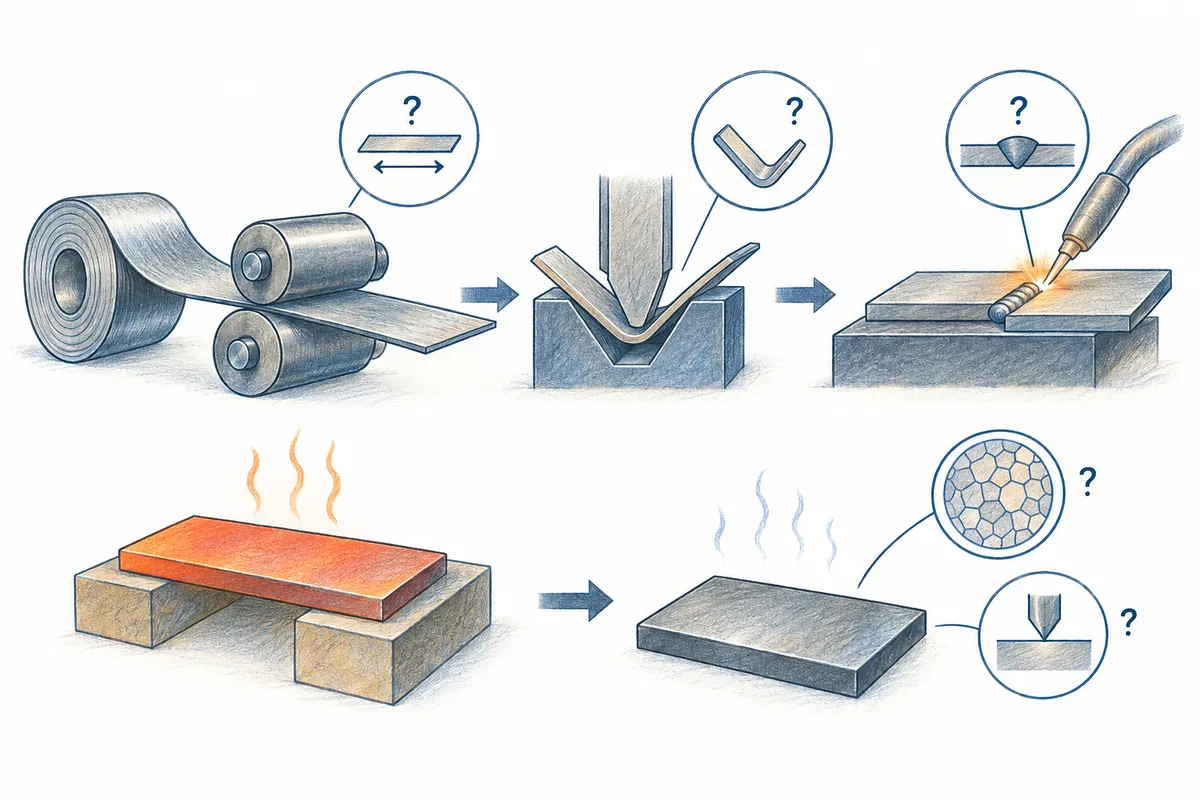
3. Chemical Properties
- Heat resistance (refractoriness): The stability and fire resistance of a metallic material at high temperatures.
- Corrosion resistance: The ability to maintain stability without corroding under environmental influences.
4. Processing and Manufacturing Properties
- Castability: The suitability of a metallic material for casting processes.
- Plastic workability (forgeability): The ease with which a metallic material can undergo hot working.
- Weldability: The suitability of a metallic material for welding processes.
- Machinability: The ease with which a metallic material can be cut or machined.
In this post, we have focused on the various properties of metallic materials and the terminology associated with them.
Original illustrations created to help explain this article.
Original on Tistory ↗