Atomic Structure of Materials and Atomic Bonding in Solids
This article was translated from its source language with AI assistance. Please check technical terms and equations against the original.
1. Atomic Structure
All matter consists of atoms, the basic units making everything around us, like Lego blocks. These tiny atoms contain still smaller particles: protons, neutrons, and electrons.
* Basic concepts:
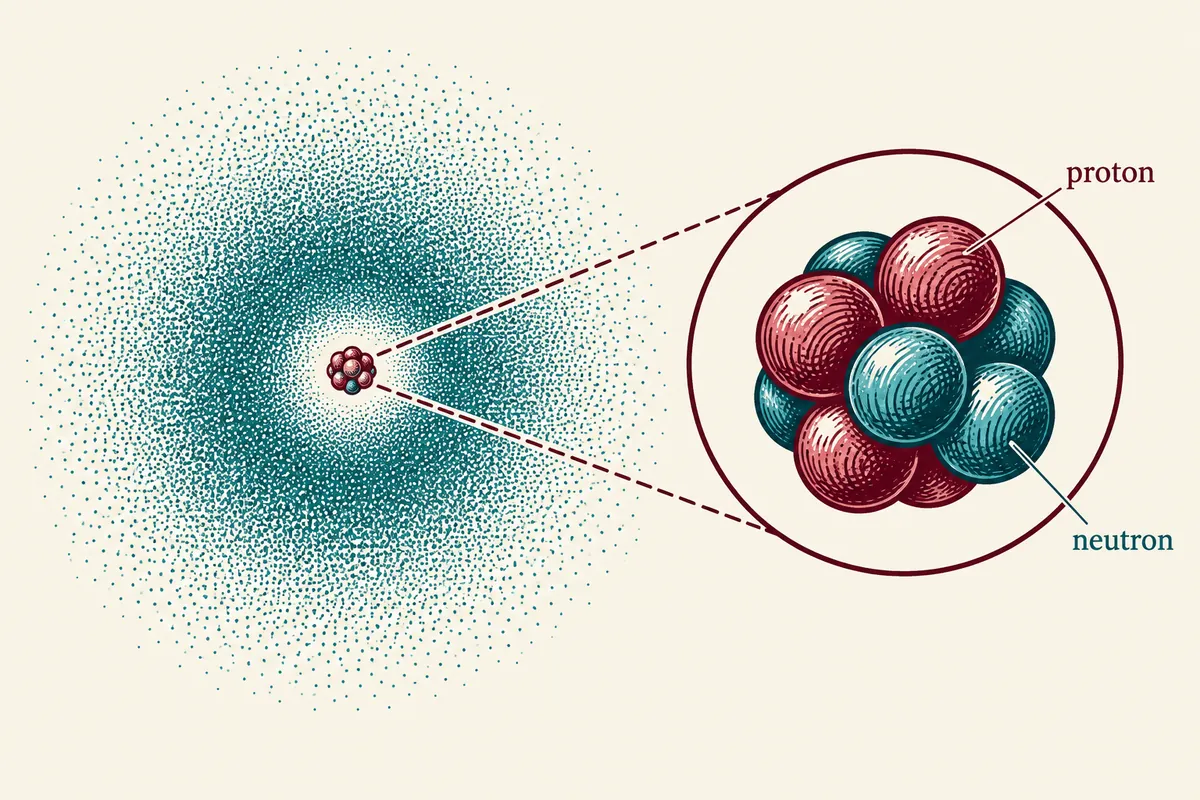
An atom has a central nucleus with electrons moving around it, like a solar system! The nucleus contains protons and neutrons. Protons carry positive charge, electrons negative charge, and neutrons no charge. Atoms are electrically neutral overall because proton and electron counts match.
* Electrons in atoms:
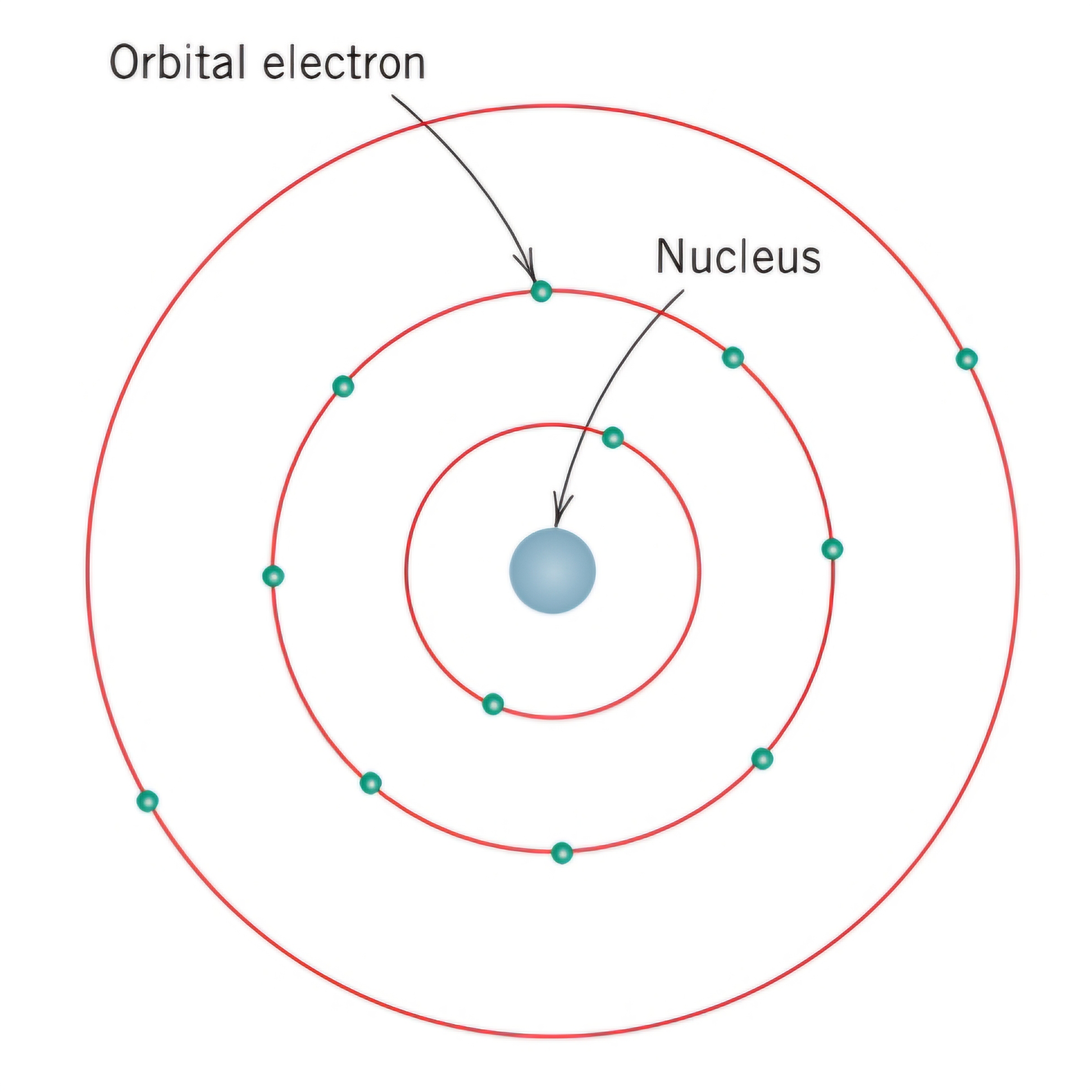
Electrons do not move arbitrarily around the nucleus, but along orbits with particular energy levels. These form layers like onion skins, each with a specific energy. Electrons gaining energy move outward; those losing energy move inward. Their movement causes phenomena such as light, electricity, and chemical reactions.
* Periodic table:
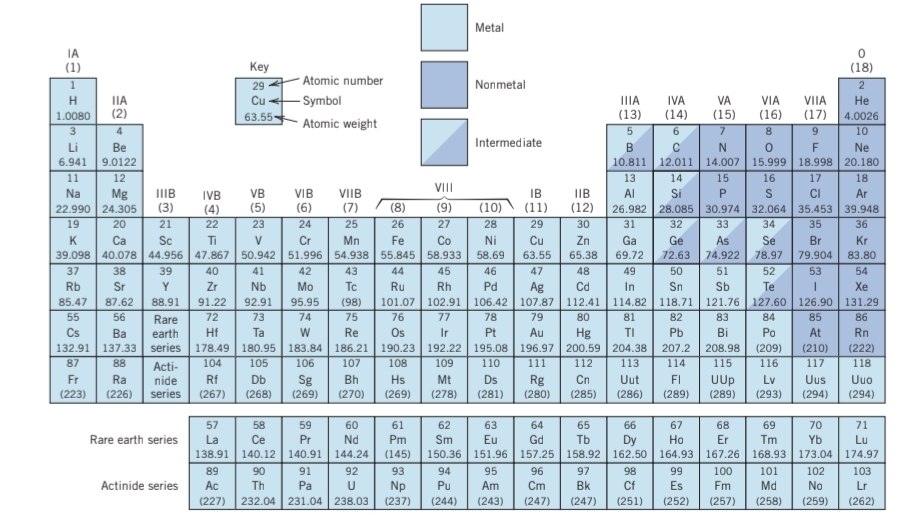
The periodic table arranges elements by atomic number, the number of nuclear protons. It helps identify characteristics at a glance; elements in the same column, for example, have similar chemical properties.
2. Atomic Bonding in Solids
Atoms rarely exist alone and usually bond with others to form molecules or solids. Bonding balances attraction and repulsion between atoms, like forces attracting or repelling magnetic poles.
* Bonding forces and energy:
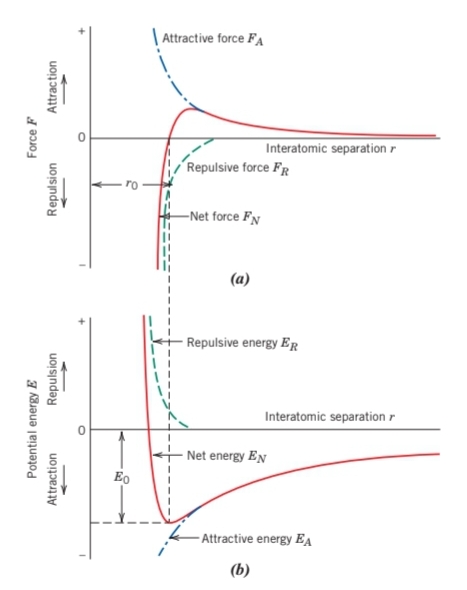
Attraction forms bonds, while repulsion prevents atoms getting too close. At their balance point, atoms are most stable. Bond energy means energy needed to break the bond: greater energy indicates a stronger bond.
* Primary interatomic bonds:
These strong bonds have three types: ionic, covalent, and metallic.
* Ionic bonding:
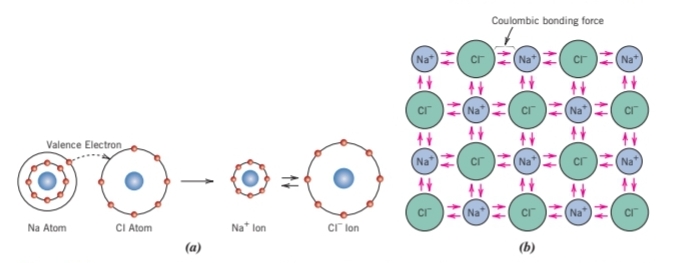
Atoms transfer electrons and become ions; electrostatic attraction between positive cations and negative anions forms the bond, like opposite magnetic poles attracting. It generally occurs between metals and nonmetals. For example, in salt (NaCl), sodium loses an electron and becomes positive, while chlorine gains one and becomes negative. Attraction between Na+ and Cl- forms salt crystals.
* Covalent bonding:
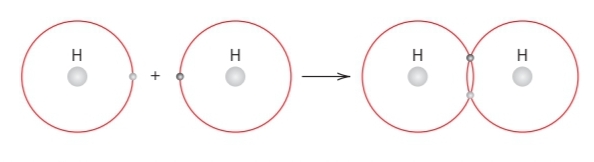
Atoms share electrons to bond, like two people holding hands. It generally occurs between nonmetals. In diamond, carbon atoms each share four electrons to form very strong covalent bonds, making diamond extremely hard.
* Metallic bonding:
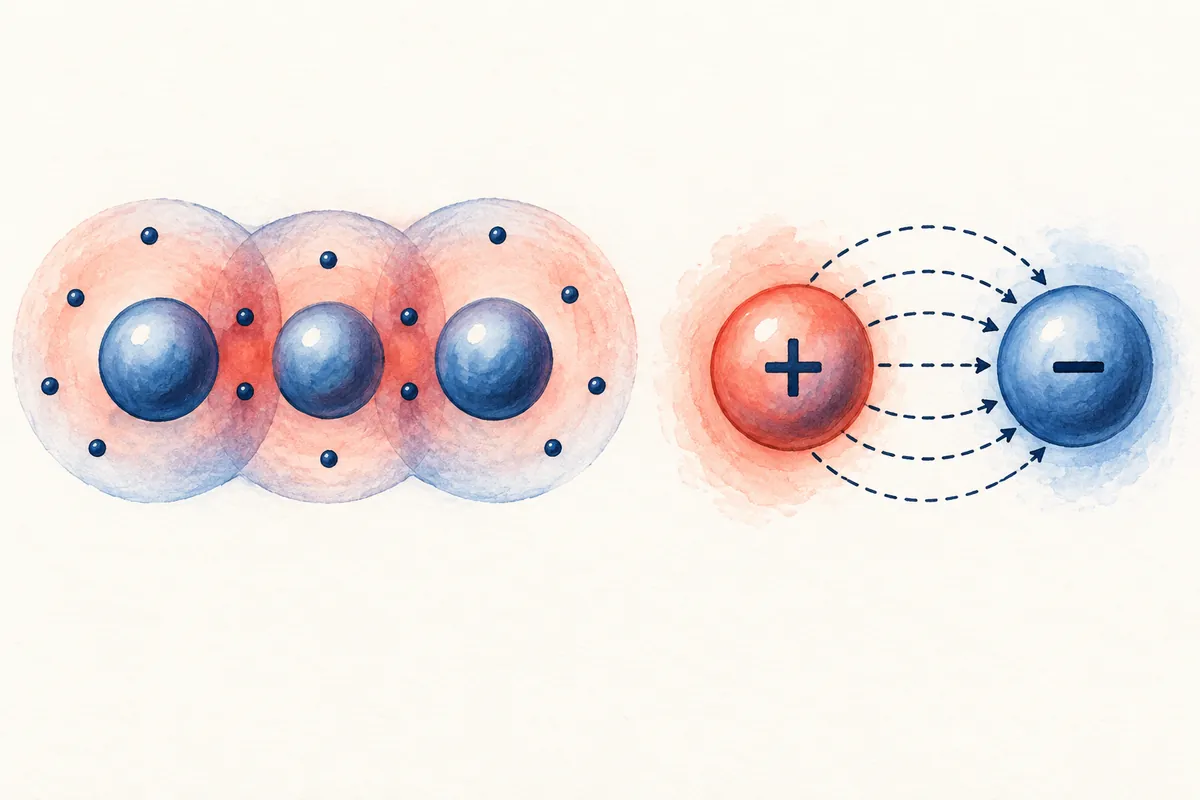
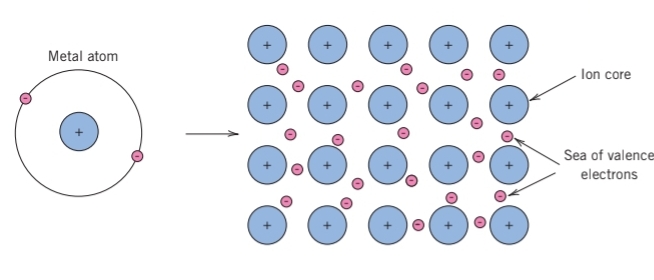
Attraction between positive metal ions and free electrons forms metallic bonds. Metal atoms tend to lose electrons readily and become positive; the released electrons move freely inside the metal. Their attraction to cations holds the metal together. For example, copper atoms release electrons, and these move freely between copper cations. This gives copper high electrical conductivity.
* Secondary or van der Waals bonding:
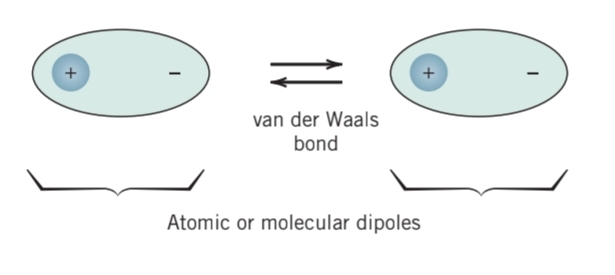
Secondary bonds are weaker than primary ones and may occur between molecules or within one molecule. They include dipole–dipole interactions, London dispersion forces, and hydrogen bonds. Dipole–dipole attraction acts between polar molecules; London forces act between momentarily formed dipoles. Hydrogen bonding is a special dipole–dipole interaction between hydrogen and highly electronegative atoms such as oxygen, nitrogen, or fluorine. For example, polar water molecules form hydrogen bonds between one molecule's hydrogen and another's oxygen, giving water a relatively high boiling point.
* Mixed bonding:
Many materials combine primary and secondary bonds. Graphite has strong covalent bonds within layers but weak van der Waals bonds between them. It is therefore strong along layers but breaks readily between weakly bonded layers.
* Molecules:
Molecules are stable units of covalently connected atoms, like assemblies of Lego blocks. They have particular shapes and sizes and may be polar or nonpolar. In water (H2O), two hydrogen atoms and one oxygen atom connect through covalent bonds.
* Correlation of bond types and material classes:
Material properties vary greatly with interatomic bonding, like creations differing with Lego block types. Ionic compounds generally have high melting points and hardness; covalent compounds can have varied melting points and hardness. Metallically bonded materials generally show high electrical conductivity and ductility.
Atomic structure and bonding are thus the fundamental determinants of material properties. Understanding these concepts helps explain and predict diverse characteristics.
Source: William D. Callister, Jr., David G. Rethwish (2018), “Materials Science and Engineering an Introduction”
Original illustrations created to help explain this article.
Original on Tistory ↗