College Physics (Engineering Physics) #001: Units Used in Physics
This article was translated from its source language with AI assistance. Please check technical terms and equations against the original.
Physics includes laws and principles needed to understand the world around us.
Most laws are mathematical relationships between physical quantities.
Physical quantities quantify phenomena; examples include length, mass, time, and temperature.
In mechanics especially,
three fundamental quantities—length, mass, and time—are important.
They are building blocks for expressing all other mechanical quantities.
Measuring and communicating them requires standards everyone understands identically and that give consistent results everywhere.
For this reason, an international committee established standards for fundamental scientific quantities in 1960. Called SI, the International System of Units, it uses the meter (m), kilogram (kg), and second (s) for length, mass, and time.
Before SI, each nation had its own standards.
For example, in 1120 an English king called his length standard a yard and defined it as the distance from his nose to his outstretched fingertips. France used King Louis XIV's royal foot length.
Almost all nations and the scientific community now use SI. Internationally recognized standards, subdivisions, and multiples produce consistent measurements worldwide.
These standards sometimes change over time.
The meter was originally one ten-millionth of the distance from the equator to the North Pole,
later the separation of two marks on a platinum–iridium bar,
and recently the distance light travels in vacuum in 1/299,792,458 seconds.
The kilogram, SI's mass unit, is defined by a particular platinum–iridium cylinder retained at the International Bureau of Weights and Measures in Sèvres, France.
The second was originally part of a mean solar day; once variations in Earth's rotation were recognized, it was redefined using atomic clocks based on cesium-133's characteristic frequency.
Although basic units evolved, their purpose remained: internationally recognized standards for scientific measurement and research.
That was today's introduction to fundamental physical quantities and SI units. Thank you!
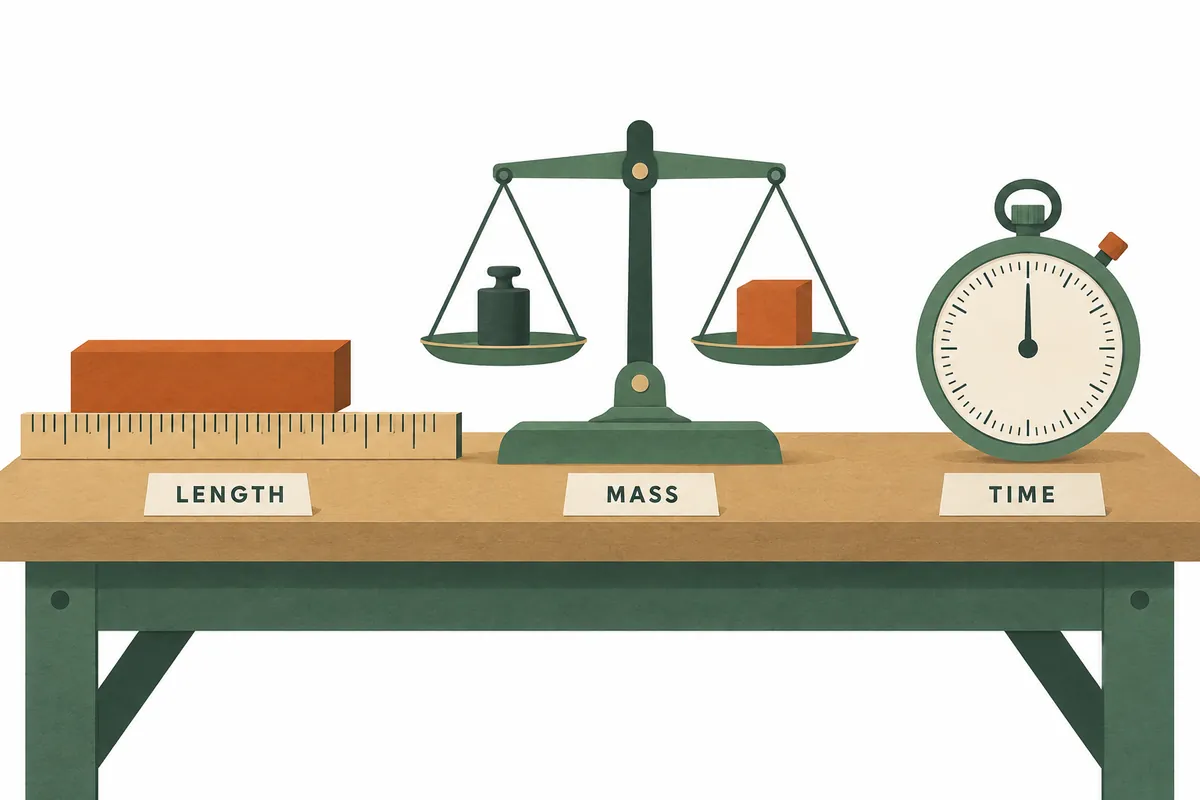
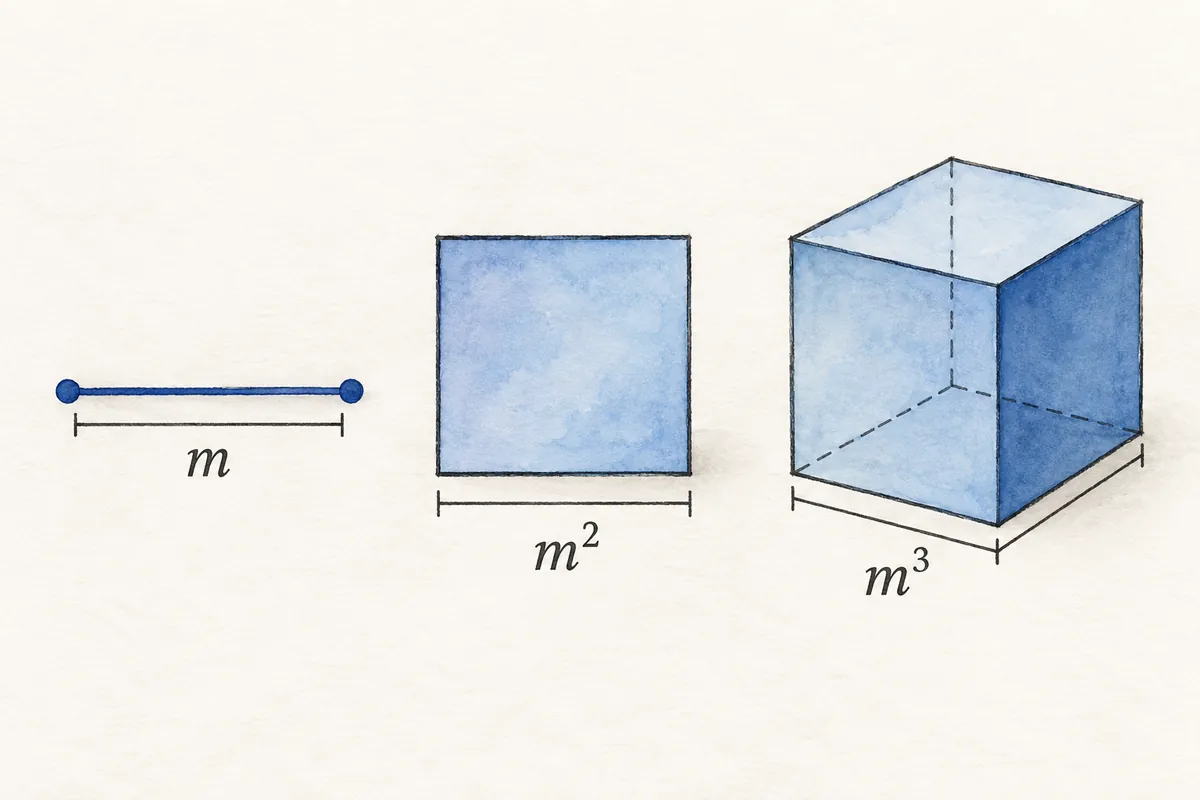
Original illustrations created to help explain this article.
Original on Tistory ↗