Overview of Mechanics of Materials (1): From the Discipline to Load Classification
This article was translated from its source language with AI assistance. Please check technical terms and equations against the original.
Mechanics of Materials: The study of the internal effects of external forces on materials,, that is,, a material's resistance to failure,(or strength,: strength)is the subject of this discipline.
l Internal Changes in Materials
1. Deformation: deformation / is expressed as strain(strain).
2. Resistance to Force: resisting / is expressed as stress(stress).
l Types of Deformation
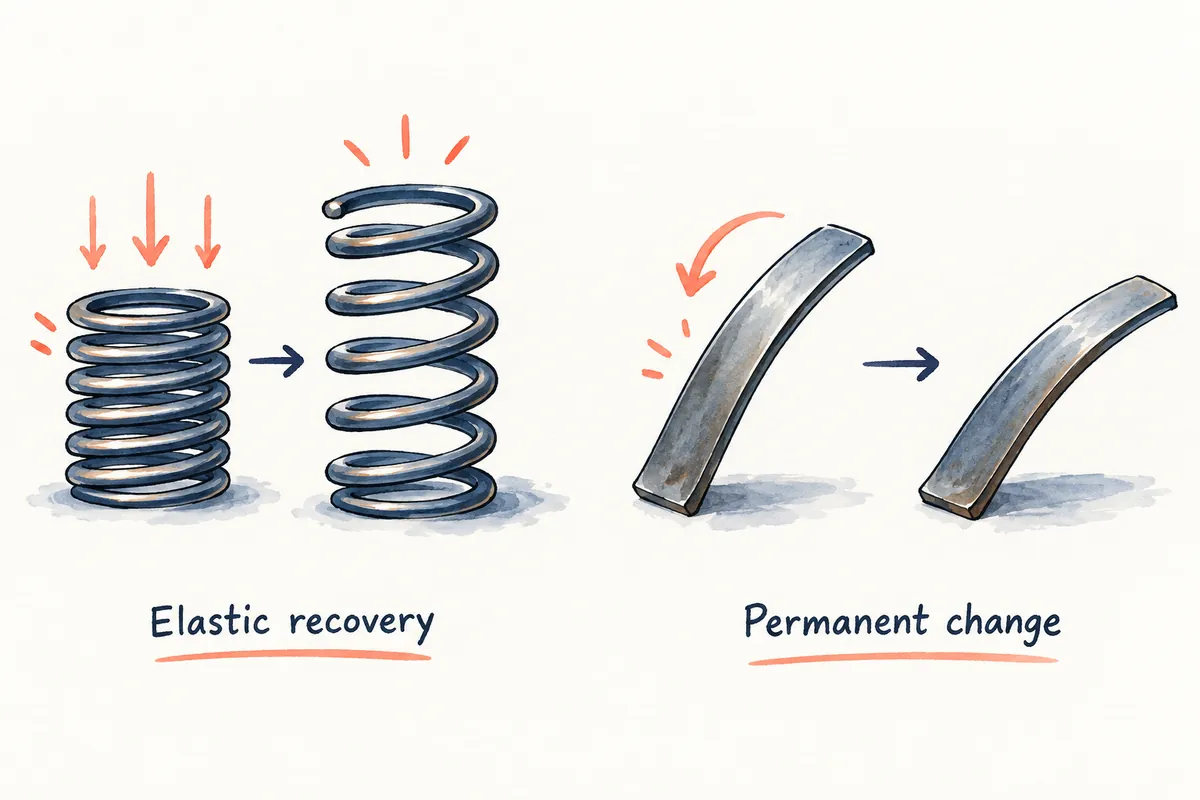
1. Elasticity(elasticity): When a body deforms under an external force and that force is removed,, it tends to return to its original shape..
A. EX) Rubber, Springs
B. A property appearing only in solids with a definite shape
2. Plasticity(plasticity): When a body deforms under an external force and that force is removed,, it does not return to its original state./ Permanent deformation
l Load: An external force acting on a body
1. Classification of Loads by How They Act
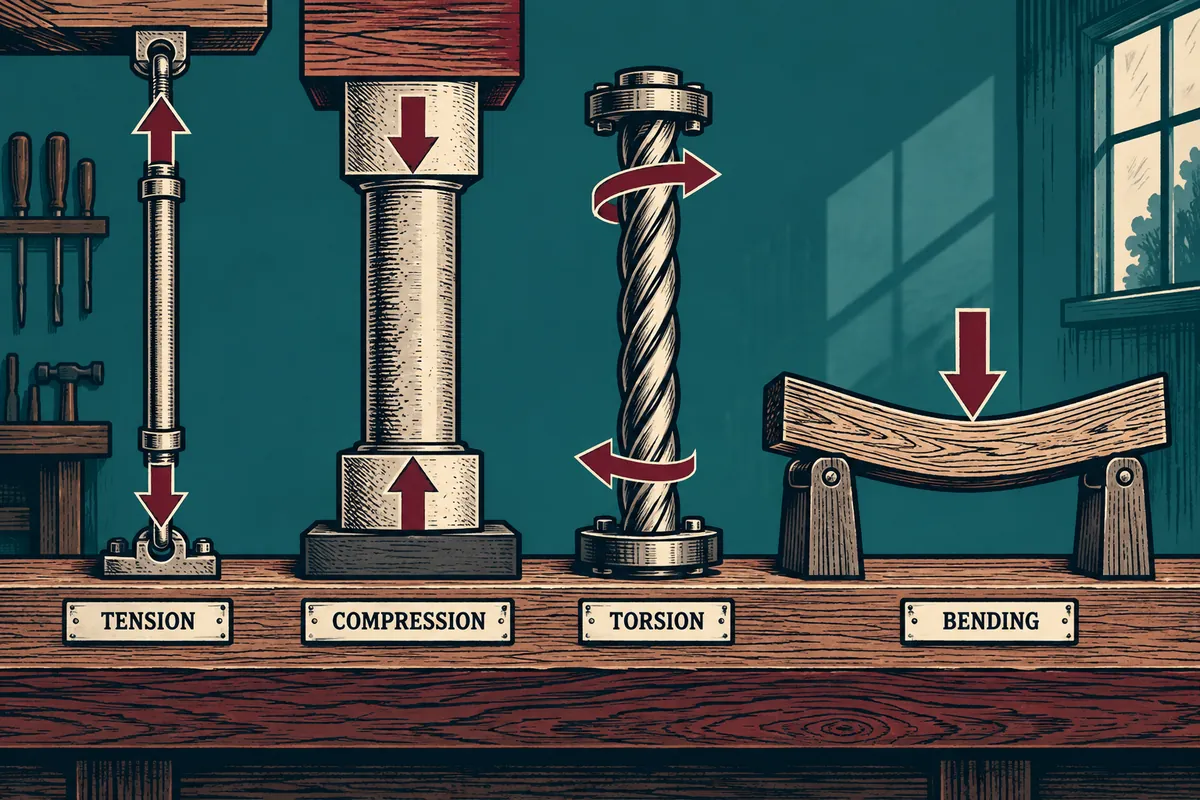
A. Axial load[=Normal load](Axal load=normal load): A load acting along the material's axis(in the normal)direction
i. Tensile load(tensile load) : A load acting to pull a material along its axis
ii. Compressive load(compressive load) : A load acting to compress a material along its axis
B. Shear load(shear load): A load acting perpendicular to the material's axis
C. Bending load(bending load): A load acting when, a material is bent
D. Torsional load(torsional and twisting load): A load acting when, a material is twisted
1. Classification of Loads by Duration of Application
A. Static load:
i. Its magnitude and direction do not change with time.
ii. If magnitude and direction do change with time,, the changes are small enough to be neglected.
B. Dynamic load: Its magnitude or direction changes with time..
i. Repeated load: A load in which forces of different magnitudes act repeatedly and continuously.
ii. Alternating load: A load whose magnitude and direction change with time, Vibration may produce superposition effects.
iii. Impact load: A load that applies a large force through a momentary impact.
2 Classification by Load Distribution
A. Concentrated load: The load is concentrated at a particular location.
B. Distributed load: A load distributed over a certain length or area
C. Moving load: A load that acts while moving over a body
i. EX) When a train passes,, the load acting on the railway is an example.
Original illustrations created to help explain this article.
Original on Tistory ↗