Mechanics of Materials: Strength Testing—Understanding Tensile and Compression Tests
This article was translated from its source language with AI assistance. Please check technical terms and equations against the original.
Hello. Today we will briefly discuss tensile and compression tests.
Understanding the Tensile Test
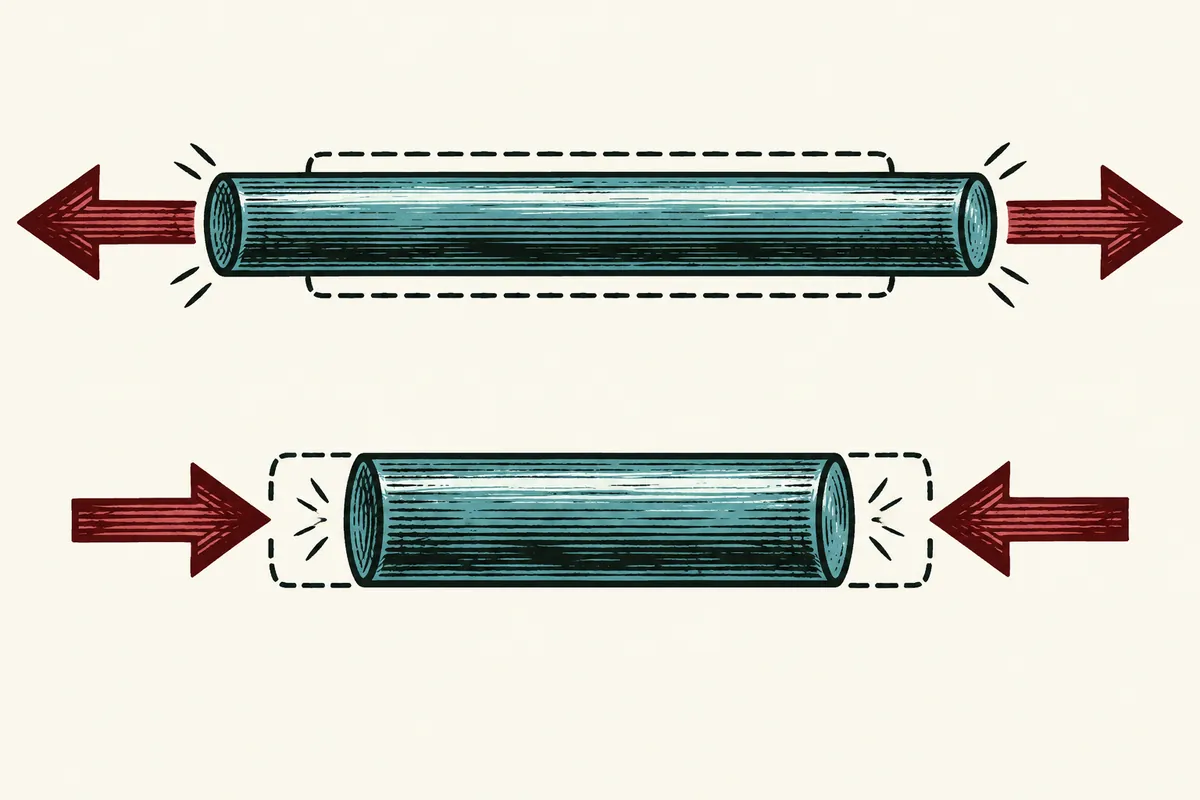
The tensile test is one of the most fundamental experiments for measuring a material's mechanical properties. It is conducted to determine tensile strength, elongation, and permanent deformation.
Tensile Testing Machine
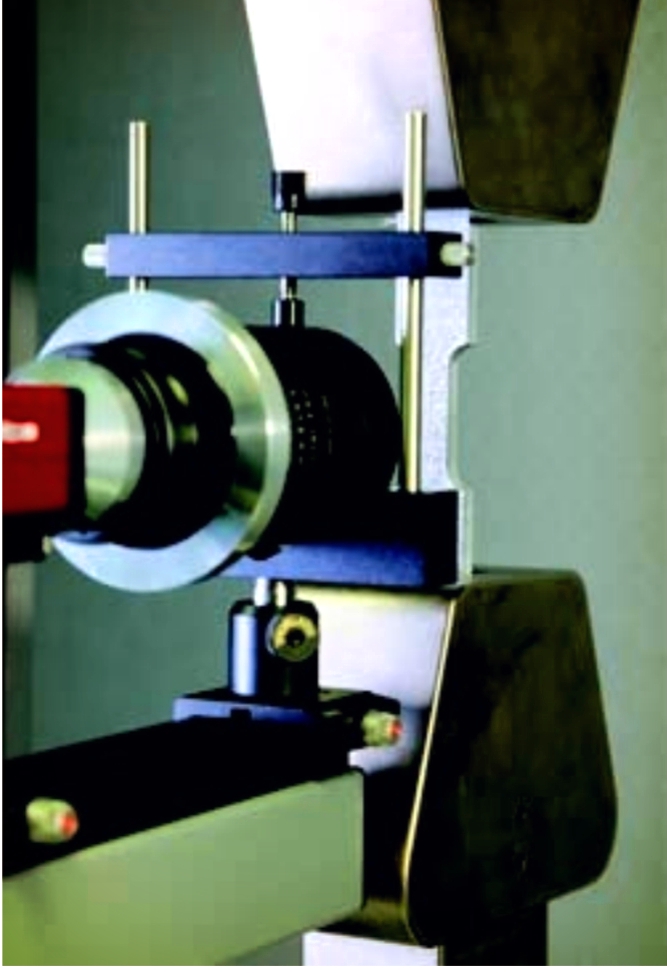
In a typical tensile testing machine, a specimen is installed between large grips and pulled in tension. A measuring device records the resulting deformation, while an automatic control and data processing system organizes the results and presents them as a graph.
Tensile Test Specimen
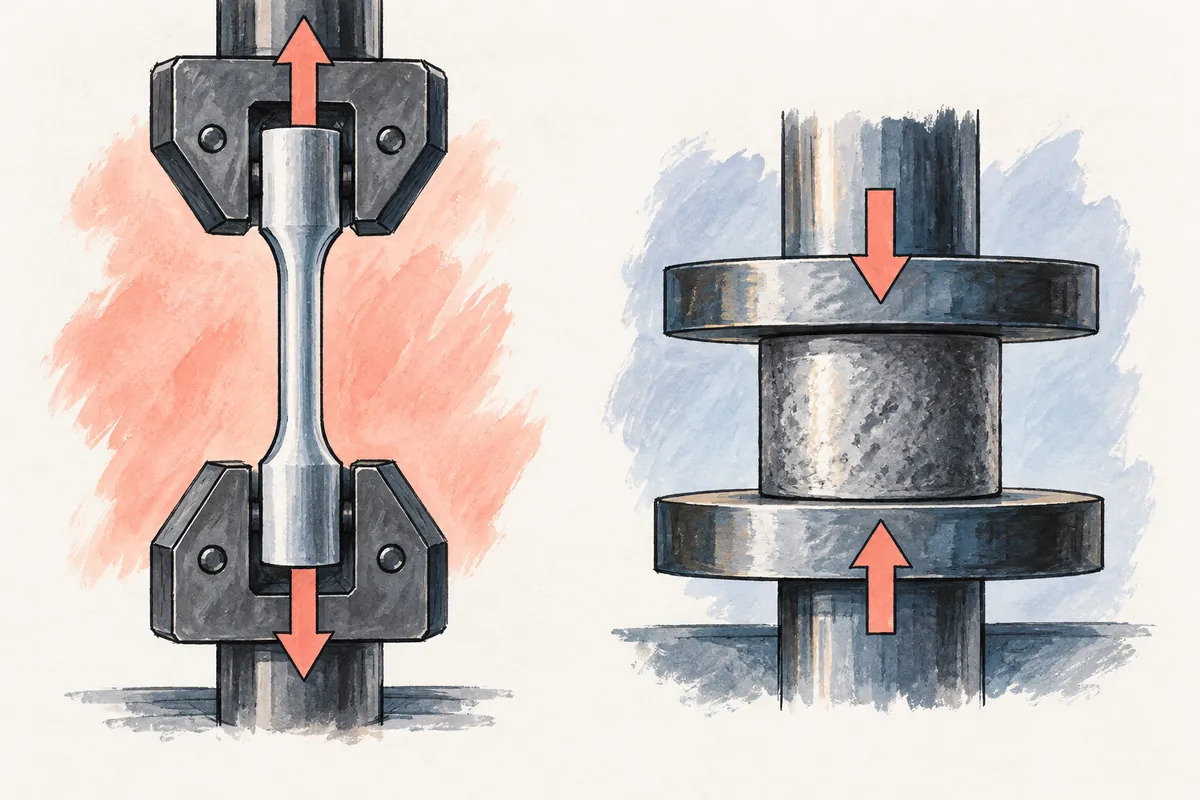
The ends of a tensile test specimen are widened to prevent damage at the grips. If failure occurs at an end, we cannot obtain the desired information about the material because the stress distribution near the grip is not uniform. A properly designed specimen fails in a region with a uniform stress distribution that experiences pure tension.
Standard Dimensions and Loading Methods
Specimen dimensions and loading methods must be standardized so that test results can be compared. ASTM, one of the major standards organizations in the United States, is a technical association that publishes specifications and standards for materials and testing. Similar organizations include ASA and NIST.
Understanding the Compression Test
A compression test is conducted to determine the maximum compressive load a material such as metal or concrete can withstand. This test is essential for ensuring the stability of structures.
Compression Test Specimen
Pressure is applied through grips that adequately support the material, and the maximum pressure it can withstand is measured. As illustrated, cubic or cylindrical specimens can be used. The shortening of the specimen is measured and recorded together with the load.
Testing the Compressive Strength of Concrete
Concrete used in important construction projects undergoes compression testing to verify that the required strength has been achieved. One example is a concrete specimen 6 inches in diameter and 12 inches long, tested at an age of 28 days. Similar but slightly smaller specimens are used for compression testing of rocks.
Today we have learned about material strength tests performed in an actual laboratory. Thank you.
Original illustrations created to help explain this article.
Original on Tistory ↗