What Is Mechanical Engineering?
This article was translated from its source language with AI assistance. Please check technical terms and equations against the original.

This post briefly explains what mechanical engineering is and what it primarily studies.
Mechanical engineering is the study of physical machines and may include forces and motion, or the flow of energy. It combines engineering physics and mathematical principles with materials science to design, analyze, manufacture, and maintain mechanical systems. It is one of the oldest and broadest engineering disciplines.
Mechanical engineers design structures and vehicles of every size. Their work includes designing engines, power plants, and other machines. Mechanical engineering requires an understanding of core areas such as solid mechanics (mechanics of materials), statics, dynamics, thermodynamics, materials science, design, and structural analysis. Physics and mathematics therefore provide a very substantial foundation.
In addition to these core areas, engineers use software such as CAD and CAM to design and analyze manufacturing plants, industrial equipment and machinery, heating and cooling systems, transportation systems, aircraft, watercraft, robots, medical devices, and weapons.
Mechanical engineering emerged as a discipline during the Industrial Revolution in 18th-century Europe. Advances in physics during the 19th century subsequently drove the development of mechanical engineering science. The discipline continues to evolve, and mechanical engineers now pursue advances in areas such as composites, mechatronics, and nanotechnology.
Mechanical engineering overlaps to some extent with aerospace, metallurgical, civil, structural, electrical, manufacturing, chemical, and industrial engineering. Engineers may also work in bioengineering, especially biomechanics, transport phenomena, biomechatronics, bionanotechnology, and modeling of biological systems.
That concludes this post on mechanical engineering. Thank you.
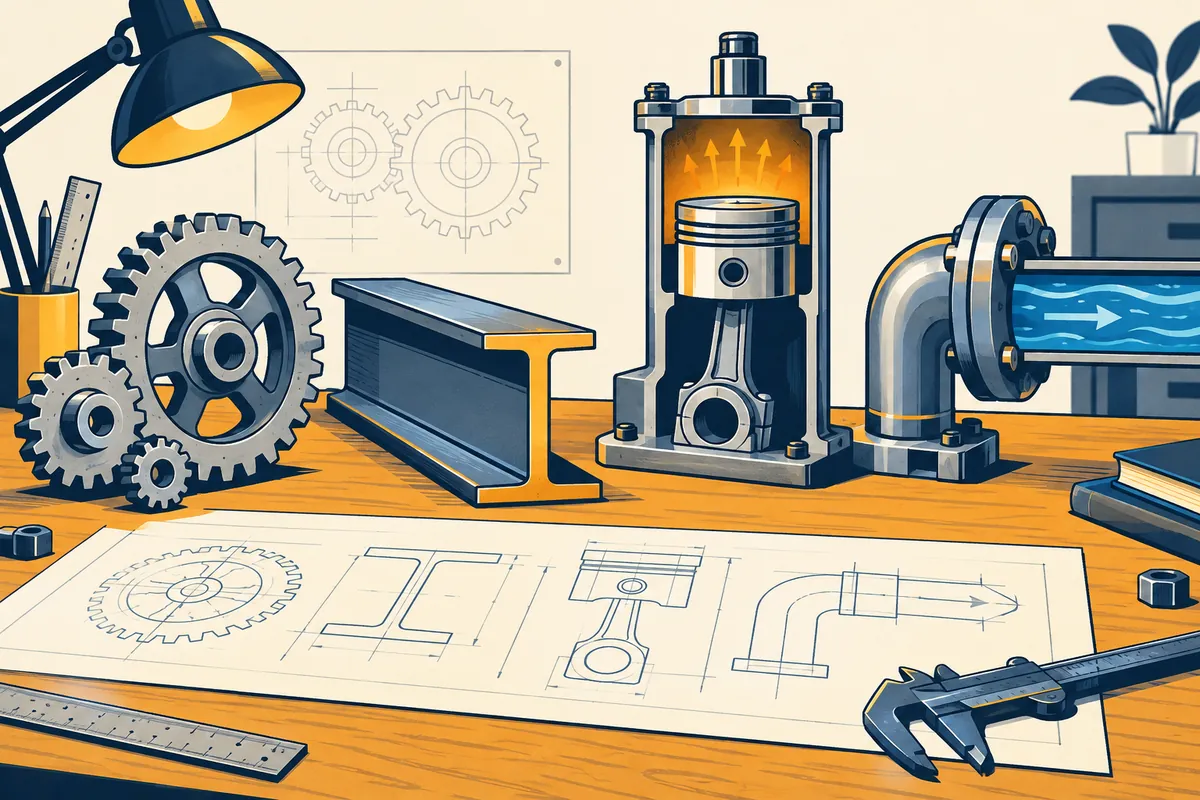
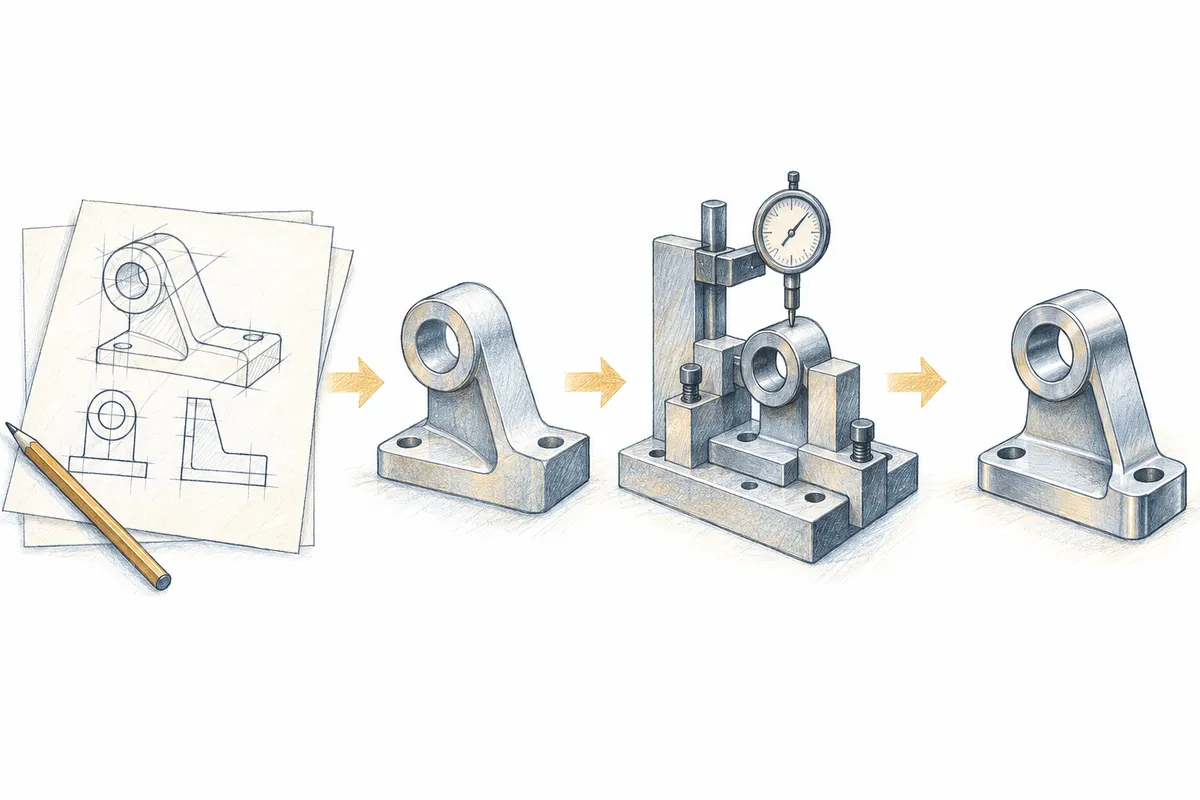
Original illustrations created to help explain this article.
Original on Tistory ↗