How to Read Web Addresses: Checking by Separating Domain, Path, Query, and Hash
This article was translated from its source language with AI assistance. Please check technical terms and equations against the original.
When looking at long web addresses, it can be confusing to determine where the site name ends and the search criteria begin. You might also wonder if copying a link leads to a different page, or if it is safe to delete the long string at the end of the address. Breaking the address down into a few components makes it easier to explain the problem while preserving the necessary parts. This article explains how to read the domain, path, query, and hash, focusing on standard HTTPS addresses, and how to inspect shared links.
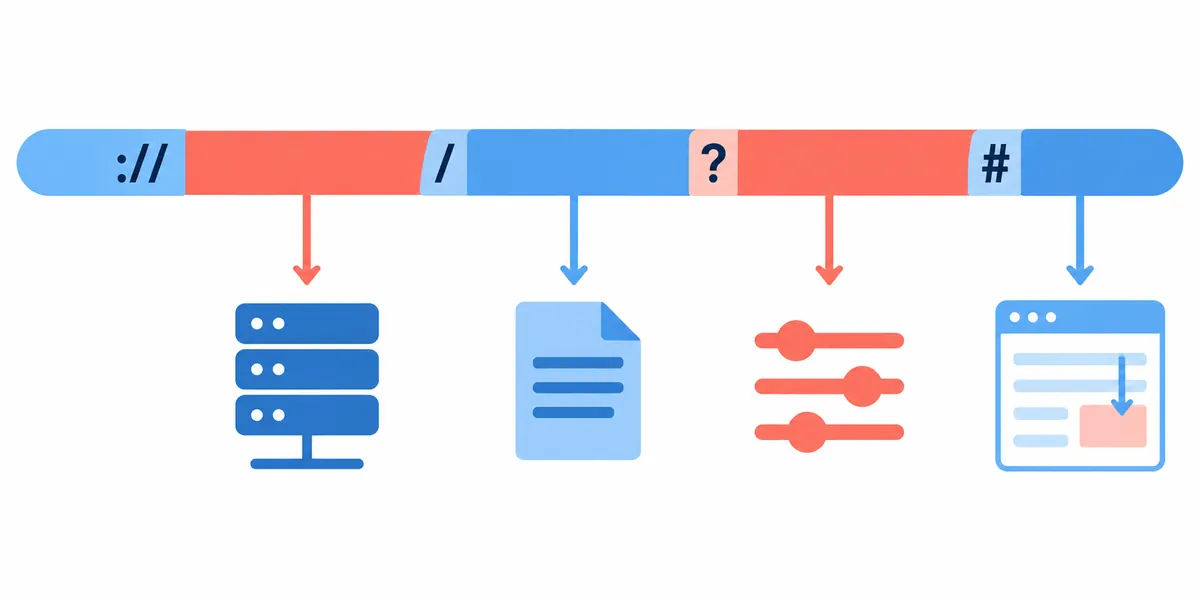
1. The criterion for truncating an address is punctuation.
I will set a specific address for explanation.https://docs.example.com:8443/manual/start?lang=ko&page=2#installis an example intended to show the structure, not a link requesting actual service usage. The https at the beginning is the method, docs.example.com is the host, 8443 is the specified port, /manual/start is the path, the part after the question mark is the query, and the part after # is the fragment. Not all addresses necessarily include a port and a query.
The standard background of this distinction isRFC 3986 Component SectionIt is . Regarding the browser's actual address processingWHATWG URL Standardis also relevant. The example breakdown and inspection methods below were not copied from the original table but were configured to help you practice reading links. Instead of trying to memorize all the rules for official URIs, try familiarizing yourself with the boundaries of the HTTPS addresses you normally use.
2. The role each part of the example address plays
| section | Example | Questions when reading |
| Scheme | https | How to approach |
| host | docs.example.com | Which server name are you connecting to? |
| port | 8443 | Is a specific connection point designated instead of the default value? |
| path | /manual/start | Which resource within the server is being requested? |
| query | lang=ko&page=2 | What conditions are being transmitted |
| Fragment | install | Does it indicate the document location or screen state? |
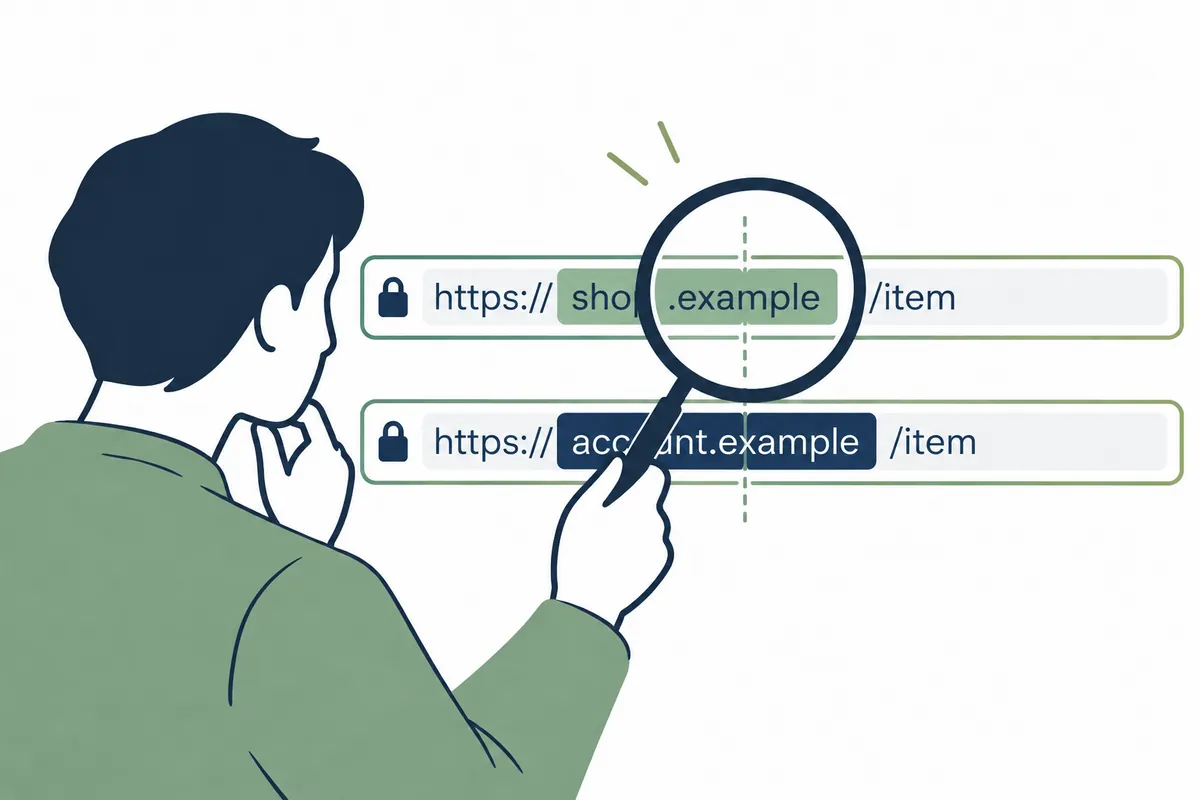
The link text displayed on the screen is separate from the actual connection address. Do not judge a site based solely on the phrase “View Official Materials”; instead, check the connection address shown by the browser. Furthermore, do not conclude that a site belongs to the same organization just because there is a familiar word at the beginning of the domain. When verifying the actual operator, check whether the connection is made through the official channels provided by the relevant organization.
3. If you confuse the host and the path, correct the incorrect part.
https://docs.example.com/manualIn , 'docs' is part of the hostname and 'manual' is the path. Changing the beginning is a different task from changing the document name at the end. When materials do not open, it is helpful to investigate separately whether the host is incorrect or if the path for the same host is outdated. If the site home opens but only a specific document fails, you can compare the latest menu links with the document path.
Even if a path looks like a folder, it does not necessarily correspond to an actual file folder on the server. /help/123 could point to a post in the database. The absence of .html at the end of the address does not mean it is not a webpage. Since case sensitivity and the handling of slashes can also vary depending on service rules, we do not make arbitrary changes for the sake of readability and instead use the links provided by the service as the standard.
When writing addresses in documents, managing the display title and the actual link separately makes modifications easier. For example, record the source address and verification date as separate items under the title “Installation Guide.” This allows you to verify whether the link remains intact even if the title is changed, and whether changing the link leads to other materials. This is a useful habit not only for site administrators but also for report writers.
4. Query strings must not be deleted.
The lang=ko&page=2 after the question mark conveys two conditions in this example. The actual meaning is determined by the service. Even pages with the same name may be a page number on one site and a different setting on another. Since queries for login or download links may include values for access, if you delete everything thinking "what comes after the question mark is an advertisement," the desired material may not open.
If you want to organize links for sharing, first locate the site's share button or unique link function. For organized links, check the actual document title and selection criteria in a separate window. You may need to preserve search terms and filters to cite specific search results in a report. Meanwhile, if the purpose is to share the content, you can use the representative links provided by the service instead of unnecessary tracking conditions. Whether to delete is determined by the role, not the length.
For example, if you remove sorting conditions from a product search URL, the display order may change even though the items remain the same. If you remove a specific price range, the result set itself may change. In this case, the judgment that "it is the same content because it is the same site" is not sufficient. First, determine whether the purpose of sharing is product details or results with search conditions applied.
5. # The part after this separates and reads the document location and app state.
In general documentation links, #install can be used to point to the location of the installation section. Fragments are not parts that are transmitted directly included in the server destination address of an HTTP request. However, this does not mean they are merely decorative. Web apps running in a browser can read the value following # to switch screens or represent selection states.
To share a specific subheading in a long explanatory text, copy the corresponding table of contents link and verify that the location actually opens. If the subheading's identifier changes later, the text may open but not lead to the intended location. By securing the full URL of the text and including "Refer to the installation section" in the description, readers can easily find the material even if the location link changes.
You should not extend the general rule that fragments are not included in server requests to "this value is not processed by any app." This is because the app's JavaScript can read it and create other requests. Therefore, you must verify yourself whether the result of removing the hash from the address to be shared matches the original screen.
6. Please preserve Hangul and the % symbol during the copying process.
If the address contains Korean characters or spaces, the browser may display the human-readable form differently from the encoded form. You should not assume that the address is corrupted simply because the combination of % and the characters following it is visible. Manually deleting parts representing bytes, such as %20, or re-encoding an already encoded value can result in a different address.
For example, when concatenating two search conditions, the separator in the actual address is a single '&' character. In the HTML source, this character can be represented as the five characters '&'. Copying a link rendered by the browser is different from copying the HTML source notation exactly as it appears. If you enter the raw notation '&' directly into the address bar, the name of the next condition may change. Retrieve the original link using the address copy function, and handle it according to the HTML context when inserting it into a document.
If the address is broken, use the link copy function on the original page again rather than arbitrarily translating Korean into English. Also, check if the messaging app has inserted line breaks or parentheses at the end of sentences. It is easy to spot these differences if you place the copied address in a plain text space like Notepad for a moment and read the beginning and end.
7. A small comparison practice when links don't open
The following is an address reading exercise that does not perform an actual network request. A ishttps://example.com/help?page=2#download, B ishttps://example.com/help?page=1#download, C ishttps://example.com/help?page=2#installLet's assume . A and B have different queries, and A and C have different fragments. While we cannot determine what results the server will provide based solely on these differences, we can identify which parts to compare.
In actual service issues, place the original address and the latest link that opens correctly side by side. Compare them in the order of host, path, condition, and document location. If you change everything at once, it is difficult to determine which changes had an impact. Record the login or validity period required by the service as conditions other than the address structure. Even if the URL is copied correctly, materials that only open to logged-in users may not be delivered to other readers.
8. Checklist to apply before sharing
First, verify that the page title indicated by the link matches the material you intend to share. Second, determine if specific search criteria or page numbers are required. Third, check if the subheading location needs to be shared. Fourth, check if the address contains a private download token or a one-time value, and if a link for public sharing is available, use that. Fifth, record the date of verification.
When making an inquiry, please specify the scope of observation along with a publicly available address, such as “Home opens but this path fails,” “Normal if query is maintained,” or “Posts open but the table of contents position changes.” If the cause of the failure is not yet known, it is more accurate to describe the symptoms instead of the cause. The example domain in this post is for structural explanation purposes only and has not been verified for connection success, security, or the existence of actual documents.
Reading web addresses well is not just about the skill of shortening long strings. It is the ability to preserve necessary conditions, convey the same information to others, and explain which parts have changed if a problem arises. The next time you copy a link, try scanning the four sections from the host to the hash. That small check alone can explain link issues much more specifically.
Official Sources and Writing Standards
Data Verification Date: 2026-10-09. This explanation was generated by AI based on actual official data. Calculations, code, and verification examples marked separately are for illustrative purposes only and are not the results of direct testing or actual measurements of the user environment. We will re-verify whether there have been any changes to the functions and data on the publication date.
Original illustrations created to help explain this article.
Original on Tistory ↗