Restricting sources to AI: Requesting answers only within specified materials
This article was translated from its source language with AI assistance. Please check technical terms and equations against the original.
Key Summary: When requesting the AI to use only specified materials, first define the list of materials, versions, and allowed scope. Attach the location of the basis for each claim, leave conflicts with answers not found in the materials, and the request statement alone does not guarantee that external information is completely blocked.
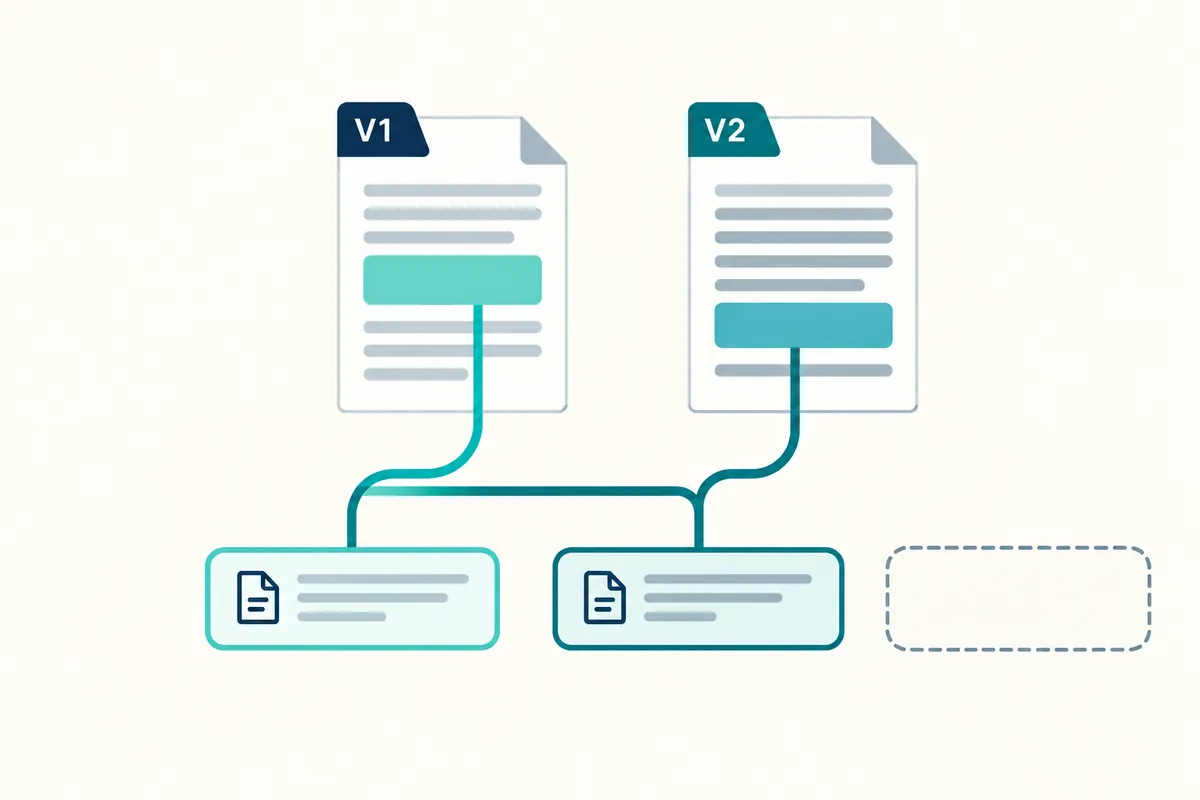
Order at a Glance
This is an illustrative diagram. It is not a screen capture or an actual test result.
1.Confirmed Allowed Material List
2.Assign numbers and locations to data
3.Request evidence for every claim
4.Separation of Omissions, Conflicts, and Inference
5.Direct comparison of original text and result
Source restrictions start with the material list.
If it is unclear what the material refers to in a request to provide an answer based solely on this data, the AI and the reader may consider different scopes. Please organize not only the file name but also the document version and the scope of provision. If there are multiple materials, assign identifiers such as A and B, and specify which document takes precedence only if there is a basis for doing so.
This article outlines the process of reviewing document-based answers. Simply stating that external knowledge should not be used in AI does not guarantee that all external information has been technically removed. You must verify the actual tools and materials provided, as well as the basis for the answers. The materials and questions below are hypothetical examples created in-house and are not records of an analysis of actual organizational documents.
| Data List Item | Enemy Information | Virtual Example |
| identifier | Distinguished short numbers | A / B |
| Document Name | Title or filename | Education Guide_example.txt |
| Version · Verification Date | What point in time the data is | v1 / Verification date recorded separately |
| Provided Range | All · Specific Section · Paragraph | A-1~A-3 |
| Location method | Page or paragraph number | Use paragraph numbers for text |
| priority | Whether there is an official replacement relationship | Prohibit arbitrary priority selection when unconfirmed |
| Read status | Whether the data was actually provided and read | Confirmed / Unconfirmed |
| Allow Inference | Scope of direct facts, calculations, and interpretations | Separate data facts from internal calculations |
Divide the question into units of claims that require evidence.
Long questions can mix various items such as schedules, targets, prices, and exceptions. First, break down the items to be answered and ask the respondent to find the basis for each. Do not group the entire question as verified simply because a single sentence has been confirmed. For items not found in the data, you can mark them as "not found in data" and indicate that additional evidence is required.
If the question is to find the event time and application deadline in the virtual training guide, write the two values on separate lines. If the material is silent in response to an additional question asking about the cost, do not assume it is free. Instead of filling in unverified information with the most plausible value, revealing the omissions aligns with the purpose of limited material answers.
Let's define the output boundary using two virtual data.
Assume that self-made material A-1 states the training time is from 10:00 to 12:00, and A-2 states the application deadline is May 10. Assume that material B-1 states the time for the same training as from 10:00 to 11:00, but it is unknown whether this is an alternative notice. In this case, the conflict in times is indicated, and one is not confirmed based solely on the assumption that it is more recent.
This date and time is not the actual event schedule. The material list also includes an entry to verify whether the two documents refer to the same target audience or session. If there are different training sessions with the same name, you must verify this possibility in the original text. The condition of being restricted material does not automatically guarantee the factual accuracy or scope of application of the document.
직접 만든 가상 자료
A-1: 교육 시각은 10시부터 12시까지다.
A-2: 신청 마감은 5월 10일이다.
A-3: 준비물은 개인 노트다.
B-1: 교육 시각은 10시부터 11시까지다.
B-2: 이 문서가 A를 대체하는지 명시하지 않는다.

질문
Q1. 교육 시간은?
Q2. 신청 마감일은?
Q3. 참가 비용은?
Q4. A의 시각을 기준으로 지속 시간은?

기대 출력의 범위
Q1: A-1과 B-1 충돌. 실제 적용 문서·회차 추가 확인 필요.
Q2: A-2에 5월 10일. 연도는 제공 문장에 없음.
Q3: 제공 자료에서 찾지 못함. 무료·유료 추정 금지.
Q4: A-1만을 가정하면 2시간. 직접 자료 사실과 계산을 구분.

위 문장들은 실제 행사·조직 자료가 아닌 설명용 예시입니다.
Directly separates and displays facts, inferences, and calculations.
The time written in the material is a direct fact, and the two hours derived from the difference between the two times are the result of calculation. The assumption that other training sessions will require the same supplies is an extension that cannot be confirmed solely from the provided sentence. Attaching a type to the output allows you to distinguish between the connections in the original text and those created by the author.
If the request allows calculations, list the values used along with the assumptions. For example, the scope of simple subtraction may vary in sentences that omit times past midnight or dates. Even if the calculation result appears accurate, if input values conflict, do not finalize the actual result; instead, display the assumed data.
| Virtual Question | Answer Status | Basis·Limitations |
| Education Time | Conflict between data | A-1 10~12 / B-1 10~11 |
| Application Closed | Direct facts of the provided sentence | A-2 May 10; Year not displayed |
| Participation Fee | Not found in data | Not assumed to be free |
| Supplies | Direct facts of the provided sentence | A-3 Personal Note |
| A Standard Duration | Calculation based on assumptions | 12−10 = 2 hours; Actual application documentation unconfirmed |
| Does B replace A? | Unidentified | No replacement relationship phrase |
| Was the last event the same? | Out of range | Materials for other episodes are needed |
| Is all content in the document up to date? | requires separate verification | Data restriction and factual verification are different. |
distinguishes between providing a file and reading its contents.
Claude Official File Help explains the delivery method and processing scope by format. If image content is required in text-based non-PDF materials, you may need to check the support scope separately. The mere presence of an attachment icon does not guarantee that all pages, tables, or figures have been read.
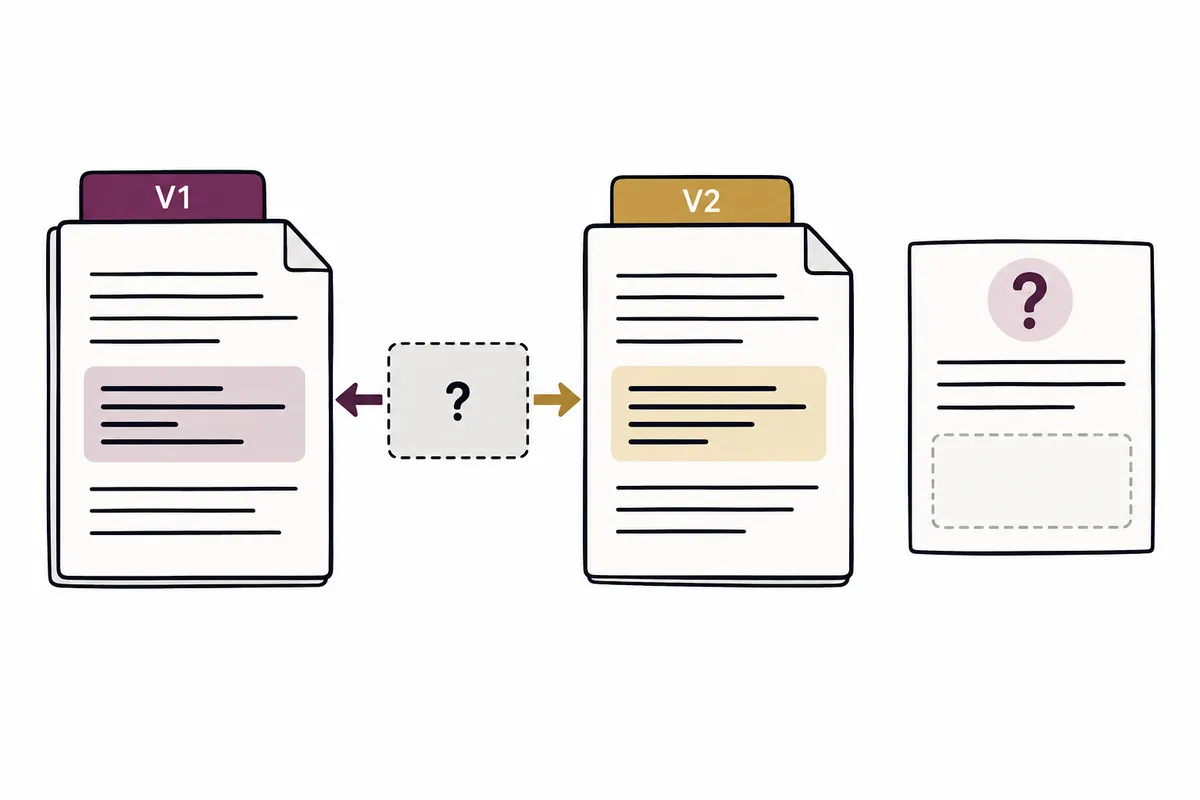
You can compare the location and content of the representative paragraph with the original text when the AI presents them as evidence. If you were unable to access the material, please indicate that it was unread and request that the answer not be filled with external memory. This post has not directly tested upload restrictions or material processing success on specific accounts.
Distinguishes between citation functions and request-based grounds.
Anthropic's official Citations documentation describes the feature in the API that provides the location of documentation citations. You must distinguish between environments where this feature is available and the method of requesting citations in general conversation. The API documentation does not state that this feature is automatically provided with the same settings on all consumer screens.
Even when using the feature, readers must verify whether the evidence actually supports the claims. The fact that a sentence has been quoted is separate from the conclusion that all claims in the response are faithful to the original text. This article does not present the results of calling the API or executing the quoting function, and the current tool support status is left to be verified in the official documentation and actual environments.
Answers that only include source links lack the scope of evidence.
Even if a document address is provided at the end of the response, it may not be clear which argument was taken from which sentence. Please request that the source number, page, and paragraph location be attached for each argument, and verify the important sentences yourself. The AI does not determine that the original text was opened or that the link supports the entire sentence merely because a link exists.
If the original text explains only some of the subjects, those conditions must also be included in the answer. Attaching an event description link as the basis for costs when the same material does not mention expenses constitutes insufficient evidence. If you cannot find the necessary evidence, you should mark the answer as unverified instead of fabricating the source.
설명용 제한 자료 요청문
허용 자료: A와 B의 제공 문단만 사용해줘.
각 답을 직접 사실 / 계산 / 해석 / 자료 없음 / 충돌로 구분해줘.
주장마다 자료 식별자와 실제 근거 위치를 붙여줘.
원문에서 찾지 못한 값·날짜·연도·가격을 기억이나 추측으로 채우지 마.
A와 B가 다르면 각각의 기록을 보여 주고 대체 관계를 임의로 정하지 마.
계산이 필요하면 입력값과 가정을 적고 자료 사실과 계산 결과를 분리해줘.
자료를 읽지 못했거나 그림을 해석할 수 없으면 그 제한을 표시해줘.
마지막에 원문 대조가 필요한 주장과 추가 자료가 필요한 질문을 남겨줘.
이 요청은 출력 기준이며, 기술적 접근 차단을 구현한 것은 아니다.
Questions requiring external information redefine boundaries
If an answer not found in the specified data is absolutely necessary, define a separate scope to determine whether to use additional external official data. You can register additional documents as C and record the verification date and target scope. If external information is quietly inserted into a result originally intended to use only A and B, the validation boundary of the answer changes.
When adding material, we determine whether to maintain or modify the existing answer based on the rationale. Even if a new document is more recent, we do not assume it takes precedence over the existing question if it serves as guidance for a different target audience. The examples in this article describe how to distinguish between restricted materials and additional verification, and they do not guarantee the success of an actual web search or the discovery of the latest materials.
The verification table shows the relationship between the claim and the original text.
For each important claim in the output, compare the source location, the summary of the actual wording in the material, and the conditions. If the claim has expanded or the location cannot be found, mark it as corrected or unconfirmed. If the location of the basis is incorrect, do not simply replace it with a different link; instead, reread the text to the extent that the sentence actually supports.
Keeping verified claims and claims that have not yet been reviewed in different states makes it easier to manage the scope of verification for long answers. The fact that all fields are filled does not mean that verification is complete. For important items such as numbers, dates, and subjects, you must record the results of an actual comparison with the original text.
| verification status | expression to use | Next step |
| Comparison of basis location and sentence completed | Check within the provided data range | Review whether the application target and timing match the question |
| Original location not found | Basis unconfirmed | Do not use the sentence as a confirmed fact |
| Two data files conflict | Conflict between data | Confirm additional replacement relationships, episodes, and ranges |
| The data does not provide the answer | Not found in provided materials | Separating external material permission and necessary questions |
| Use assumptions in calculation input | Calculation of assumed conditions | Verify actual input and applied values separately |
| The argument is broad even with citations | Exceeding the basis range | Modified to fit the target and conditions of the original text |
| File processing scope unclear | Data reading unverified | Check supported formats and actual contents |
Is the boundary of the basis clearer than the number of answers regarding completion?
You can review the results if there is a list of materials and versions, the location of each claim and basis, indications of calculations and interpretations, and the scope of omissions, conflicts, and subsequent verification. Not leaving an answer to a question for which there is no material can also be a correct outcome of working with restricted materials. Creating smooth answers to all questions is not the top priority.
Official Claude sources serve as the basis for verifying the scope of file processing and API citation capabilities. The fictitious materials, requests, and validation tables were created personally, and I have not claimed to technically block the use of external information by the AI or to have tested actual APIs. Using requests and result validations together makes it clearer which answers were verified in the materials.
Official Source and Verification Scope
Official data verification date: 2026-10-08. Items re-verified by publication date: Scope of citation and file support of currently used tools, access to actual materials, grounds and targets for each claim. Blocking of technical external information is not guaranteed merely by request.
AI Authoring Assistance. The examples, figures, and work records in this text are self-created illustrative examples. They are not presented as experiences performed in actual user environments or measurement results.
Original illustrations created to help explain this article.
Original on Tistory ↗