Types of Titanium Metals, Including the Metal Used in the iPhone 15 Pro
This article was translated from its source language with AI assistance. Please check technical terms and equations against the original.
Hello. Today, we will take a closer look at titanium as a metallic material.
In particular, we will discuss titanium alloys.
When titanium alloys are broadly classified by phase, their proportions of alpha and beta titanium are often discussed. Today, we will focus on the types of titanium metals classified by phase.
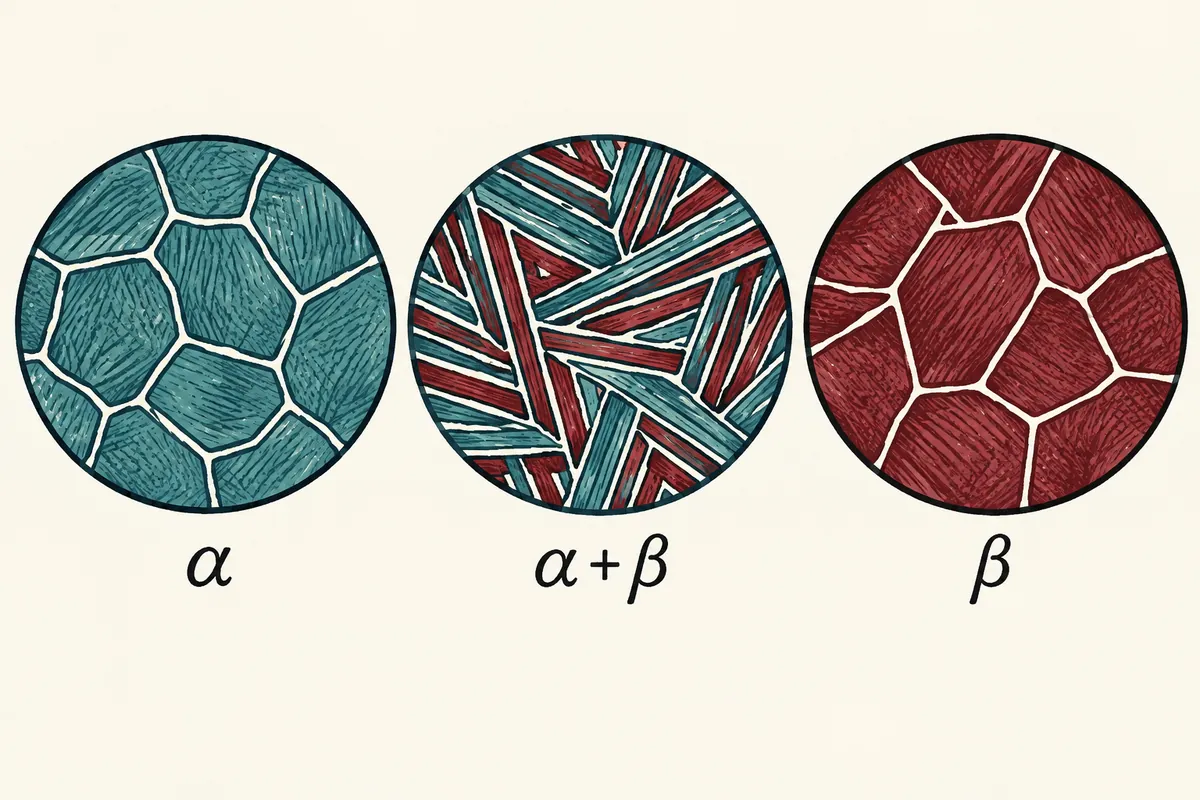
First, titanium alloys can be broadly classified by phase as follows.
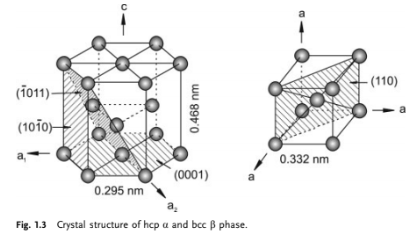
Alpha (α) titanium has the phase present in pure titanium at room temperature. Its crystal structure is hexagonal close-packed (HCP), shaped like a hexagonal prism. This phase has better workability than beta titanium and also has relatively strong corrosion resistance.
By contrast, beta (β) titanium forms in pure titanium at temperatures above approximately 890 degrees, known as the β-transus temperature. It has a cubic crystal system and a body-centered cubic (BCC) structure.
The illustration below ([1]) shows these structures. The left is HCP (alpha titanium), and the right is BCC (beta titanium).
The alloy types classified by these phases are as follows.
- α-Ti
Characteristics: Alpha titanium alloys have a stable structure at room and low temperatures.. They consist primarily of the alpha phase, and have excellent strength and toughness at low temperatures..
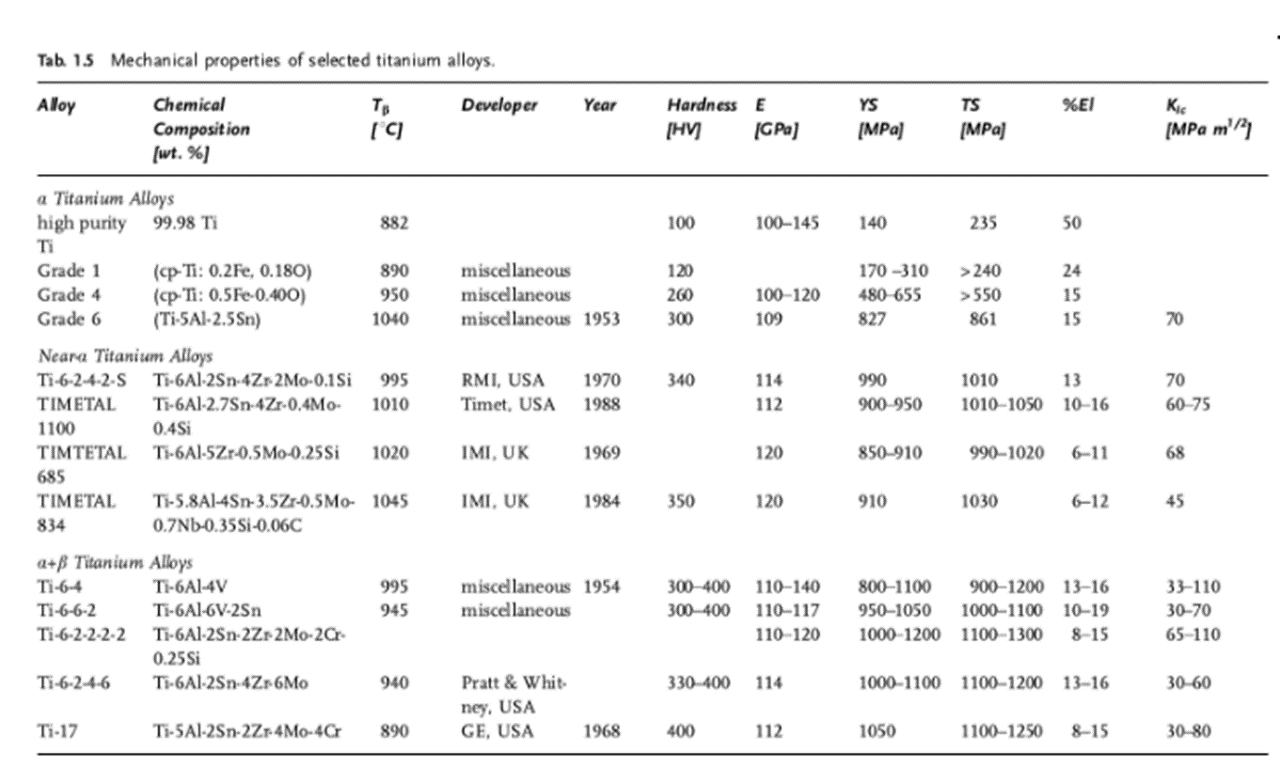
- CP-Ti (commercially pure titanium): Commercially used pure titanium is available in Grades 1 through 4, depending on oxygen concentration. Generally, as oxygen concentration—and thus the grade number—increases, yield strength and ultimate tensile strength increase, while elongation decreases. For reference, pure titanium at room temperature is alpha titanium.
Applications: Aerospace industry, Medical industry, Sports equipment and similar products (corrosion resistance)
- near α-Ti
Characteristics: Near Alpha titanium alloys are titanium alloys that perform well at high temperatures.. They have excellent creep properties and corrosion resistance..
Applications: Aerospace industry, Energy industry, Automotive industry and similar fields (Primarily used in high-temperature environments.)
- α+β Ti
Characteristics: Alpha+–beta titanium alloys consist of a mixture of alpha and beta phases.. They combine high strength and light weight, making them useful in various fields..
Applications: Aerospace industry, Medical industry, Sports equipment and similar products
(High specific strength, or strength relative to density, enables weight reduction. Ti 64 (Ti-6Al-4V), used in the iPhone, belongs to this category.)
- metastable β Ti
Characteristics: Metastable beta titanium alloys have a body-centered cubic structure that is stable at high temperatures.. They readily undergo plastic deformation and are used in various fields..
Applications: Aerospace industry, Automotive industry, Gas turbine engines and similar applications ((Primarily used in high-temperature environments.)
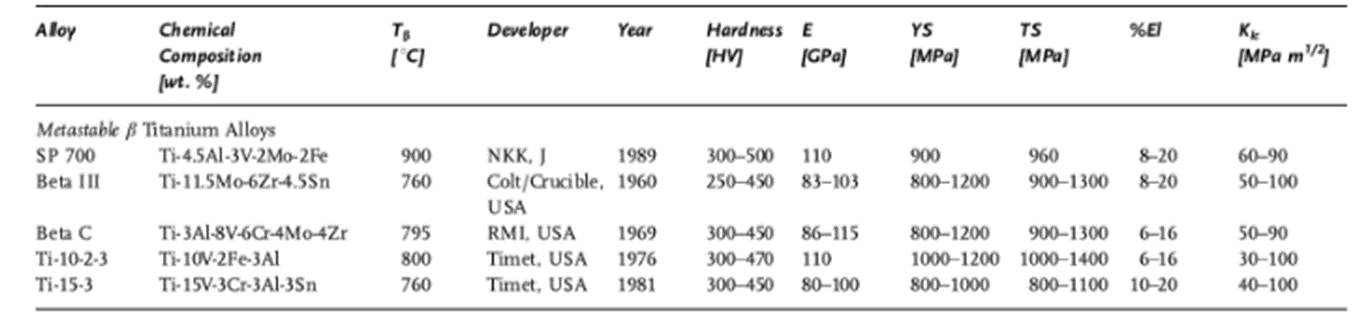
Recently, a YouTuber posted a video comparing the strength of the iPhone 14 Pro and 15 Pro. The result suggested that the iPhone 15 Pro had poorer mechanical properties, particularly its ability to absorb impact during a drop, than the iPhone 14 Pro. The problem was portrayed as though titanium itself were responsible.
If we consider only the specifications of the metallic material, titanium clearly has higher specific strength, or strength relative to density, than stainless steel and has excellent mechanical properties. It is therefore very difficult to identify the titanium material itself as the cause.
I think the following could explain why the iPhone 15 Pro appeared weaker in that YouTuber's video.
1. The experimental conditions were not identical. Although they appeared similar at first glance, it is difficult to regard a drop test as providing definitive results when an actual testing machine is not used. An experiment needs reproducibility. Although the drop locations were kept as similar as possible, the uneven floor surface and continued use of devices that had already been dropped leave some room for concern about the reliability of the experiment.
2. Titanium was not used throughout the iPhone's entire exterior. This is also stated on Apple's official website. It indicates that recycled aluminum was used alongside titanium alloy. The recycled aluminum may not have absorbed the drop impact adequately. (Recycled materials are generally considered somewhat harder to handle than conventional commercial materials.)
3. Design issues: There may have been design issues during manufacturing. Examples include differences in plate thickness or a small notch in the iPhone. Other factors could also be involved.
That concludes this brief introduction to titanium alloy types and my thoughts on the issues surrounding titanium in the iPhone 15 Pro. Thank you for reading to the end.
Sources:
[1] Leyens, Christoph, and Manfred Peters, eds. Titanium and titanium alloys: fundamentals and applications. Wiley-vch, 2006.
Original illustrations created to help explain this article.
Original on Tistory ↗