Properties of the Elements: Ti (Titanium)
This article was translated from its source language with AI assistance. Please check technical terms and equations against the original.
The material we will examine today is titanium. It is used in the iPhone 15 Pro and appeared in the film Iron Man, but often feels unfamiliar to the general public. Today, I would like to introduce some basic information about it and its main applications.
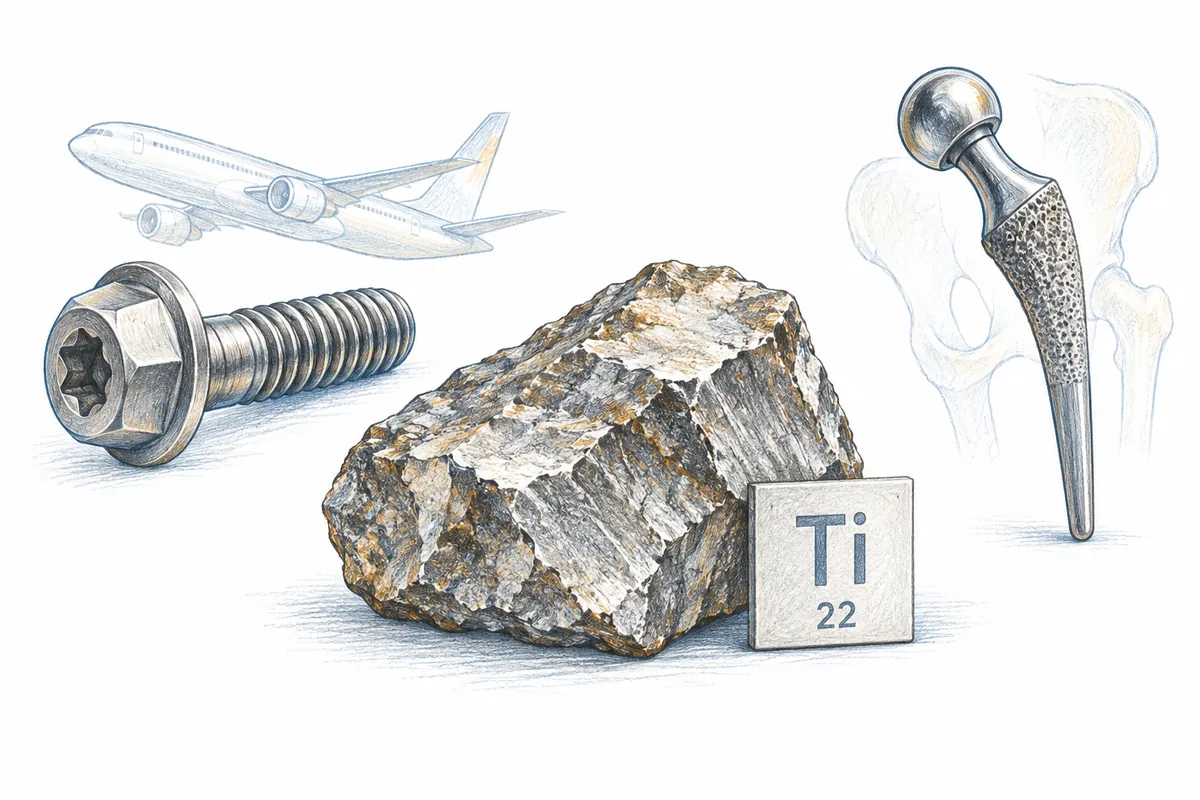

1. Basic Information:
Titanium has the atomic number 22and is a chemical element, and a silver-colored transition metal. Its name honors Greek mythology's Titans and was chosen in their honor, 1791, when Britain's William Gregor was the person who first discovered it.
2. Physical and Chemical Properties:
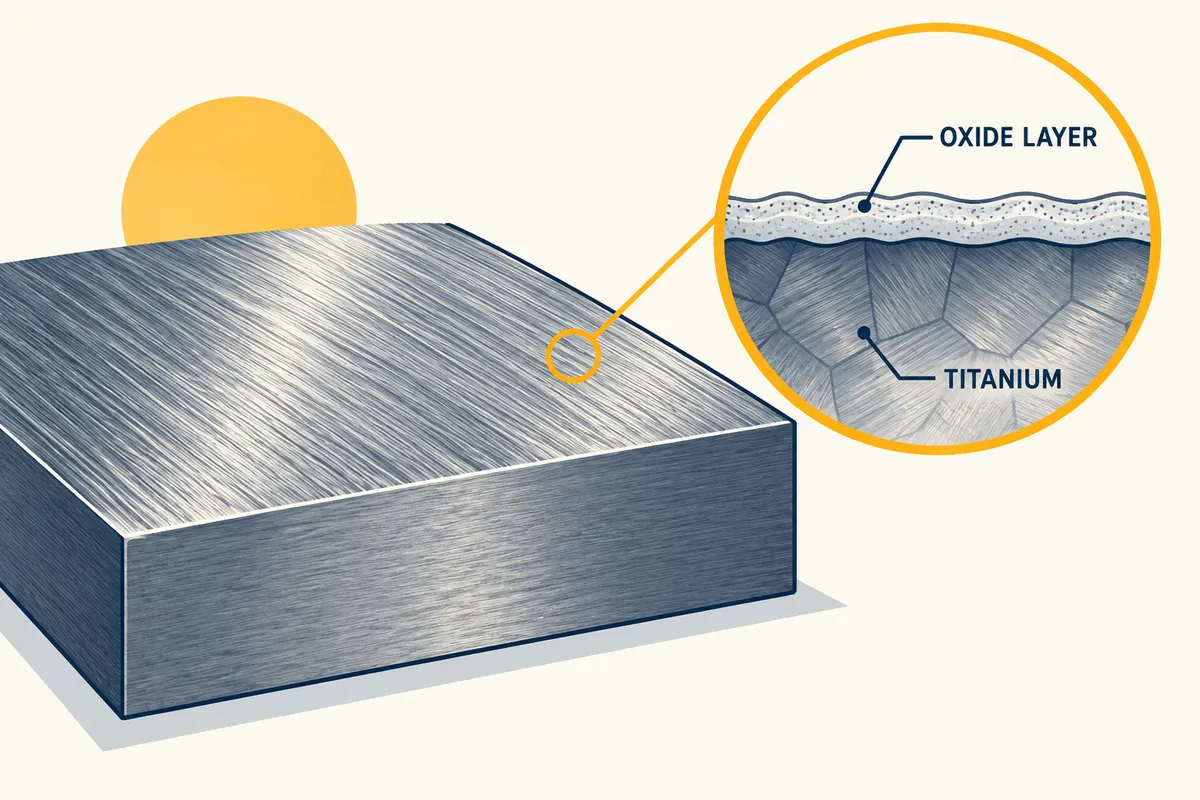
Titanium has low density and high strength together, which can be described in a single phrase as high specific strength. Titanium alloys have very high specific strength among metals. In addition,, titanium maintains, at room temperature as well ashigh temperatures, high corrosion resistance .. These properties are why titanium is widely used in spacecraft,, jet engines,, railway vehicles, and many other industrial fields.
3. Mechanical Properties:
Titanium, in commercially pure form,[CP-Ti(commercial pure titanium)]has a yield strength of 150 to 500 MPa (63,000 psi)and a tensile strength of approximately 300 to 900 MPaas its strength range. (However, these values vary with factors such as cold rolling, heat treatment, and processing history.)This is comparable to common lower-grade steel alloys and, stronger than aluminum by a factor of two or more ..
4. Occurrence and Extraction:
Titanium is found in rutile and ilmenite, among several other minerals ,, which are widely distributed in Earth's crust and lithosphere over a broad area. This metal is found in almost all living organisms,, water,, rocks,, and soils .. Titanium is extracted mainly using the Kroll and Hunter processes from its principal ores .(Hunter first succeeded in producing pure titanium, while Kroll succeeded in mass production.)
5. Compounds and Uses:
Titanium's most common compound, titanium dioxide, is used as a powerful photocatalyst and, in white pigment manufacturing .. Titanium forms alloys with various elements in alloy combinations used in aerospace,, military applications,, industrial processes,, automobiles,, agriculture,, medical prostheses,, orthopedic surgery, implants,, dentistry and dental instruments,, dental implants,, sports equipment,, jewelry,, mobile phones, and similar applications.
6. Applications of Titanium
Titanium alloys offer a high tensile-strength-to-/density ratio,, high corrosion resistance,, fatigue resistance,, crack resistance,, and resistance even at fairly high temperatures to stress, as well as excellent biocompatibility. They are widely used in the following fields.
- Use in the steel industry .
- Use in aerospace and marine industries .(Aircraft,, armor plating,, naval ships,, spacecraft,, and missiles.)
- Use in space exploration .:
Today, we have learned about titanium metal. If an opportunity arises next time, I will discuss Ti-6Al-4V (Ti Grade 5), a representative titanium alloy reportedly used in the iPhone 15 Pro.
Original illustrations created to help explain this article.
Original on Tistory ↗