Reading Nobel Physics Press Releases: Distinguishing Discoveries from Applications
This article was translated from its source language with AI assistance. Please check technical terms and equations against the original.
Nobel Physics press releases present award reasons, key experiments, and potential technological uses together. Short articles can merge them into one sentence, so distinguish what was discovered from possible applications. Explaining a discovery and discussing a product's performance or launch outlook require different evidence.
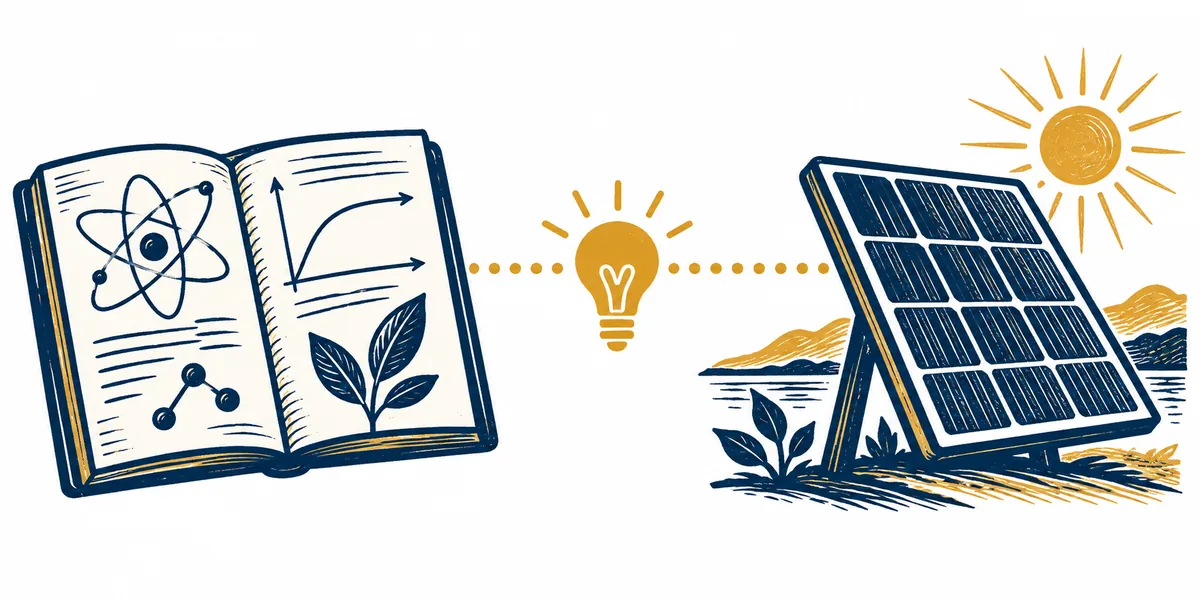
This article uses confirmed official 2025 announcements to explain reading press releases. It focuses on turning originals into information readers can assess rather than memorizing laureates. The 2026 outcome requires separate review if a new official original is verified at publication. The templates below do not reproduce or measure actual research.
Distinguishing facts, explanations, and prospects in scientific announcements
Award reason · Core achievement in the official announcement · What was studied?
Experiment explanation · Conditions linked to observations · What results were established?
Analogy · Particular property being explained · Which aspect is compared?
Application prospects · Evidence for subsequent possibilities · Is separate product information needed?
1. Check year, field, and announcing institution first
When opening official material, check its year and field. Similar search terms can mix older news or announcements in other disciplines. Distinguish publication time from award year and record title, institution, and original address for later comparison.
The checked 2025 announcement says the Royal Swedish Academy of Sciences awards Physics to John Clarke, Michel Devoret, and John Martinis. The central achievement is discovering macroscopic quantum tunnelling and energy quantisation in an electric circuit. This is not a guarantee of an application product's performance.
Distinguish authority from independence. Matching announcements on NobelPrize.org and the Academy help compare official statements, but reading the same announcement in several places does not confirm additional independent experiments. Define what questions the original can answer.
2. Separate the award reason into one sentence
The reason contains key terms identifying the object and achievement. In 2025, electric circuits, macroscopic scale, tunnelling, and energy quantisation matter. Shortening this to “awarded for quantum technology” can erase what research established.
| Item to read | Information in the 2025 example | What not to infer additionally |
| Object | Electric circuits | Identical behavior of every everyday object |
| Conditions | Experiments addressing macroscopic quantum phenomena | The same outcome in any environment |
| Achievement | Tunnelling and energy quantisation | Completed launch of a specific product |
| Subsequent meaning | Possibilities for related technological development | Guaranteed current performance and schedules |
Compare the one-sentence summary with the original reason. Added words such as “first,” “perfectly,” or “immediately” need separate evidence. Concision is possible, but removing conditions can change the claim.
3. Read what the experiment established
The Academy's 2025 explanation introduces circuits made from superconductors with an insulating layer between them. It describes researchers controlling circuit properties and identifying quantum phenomena. Connecting experimental objects with observations makes difficult terms relate to actual research questions.
The official explanation links tunnelling-related state changes with the appearance of voltage, and energy quantisation with exchanging specific amounts of energy. Understanding those observational relationships is the goal here. Detailed apparatus values and all conditions require more extensive research sources.
Separate notes into “object studied,” “conditions controlled or compared,” and “result observed.” When explanation is difficult, ask which field lacks information. Results without conditions can imply identical phenomena in every circuit. Reading an experiment also differs from reproducing it yourself.
4. Read analogies as aids to understanding
Scientific explanations can use barriers, particles, or steps as analogies. Read both the property represented and differences from the actual object. “Energy separated like steps” here explains discrete rather than arbitrarily continuous values; it does not mean literal stairs exist inside a circuit.
When creating an analogy, state which aspect it explains. Explaining distinct values differs from explaining operating speed. Do not assume one analogy explains both.
Apply this to illustrations too. The figures here compare information in a press release; they are not experimental circuit diagrams or measured quantum graphs. Reusing researchers' figures requires checking their sources and terms. Attractive imagery alone does not add experimental evidence.
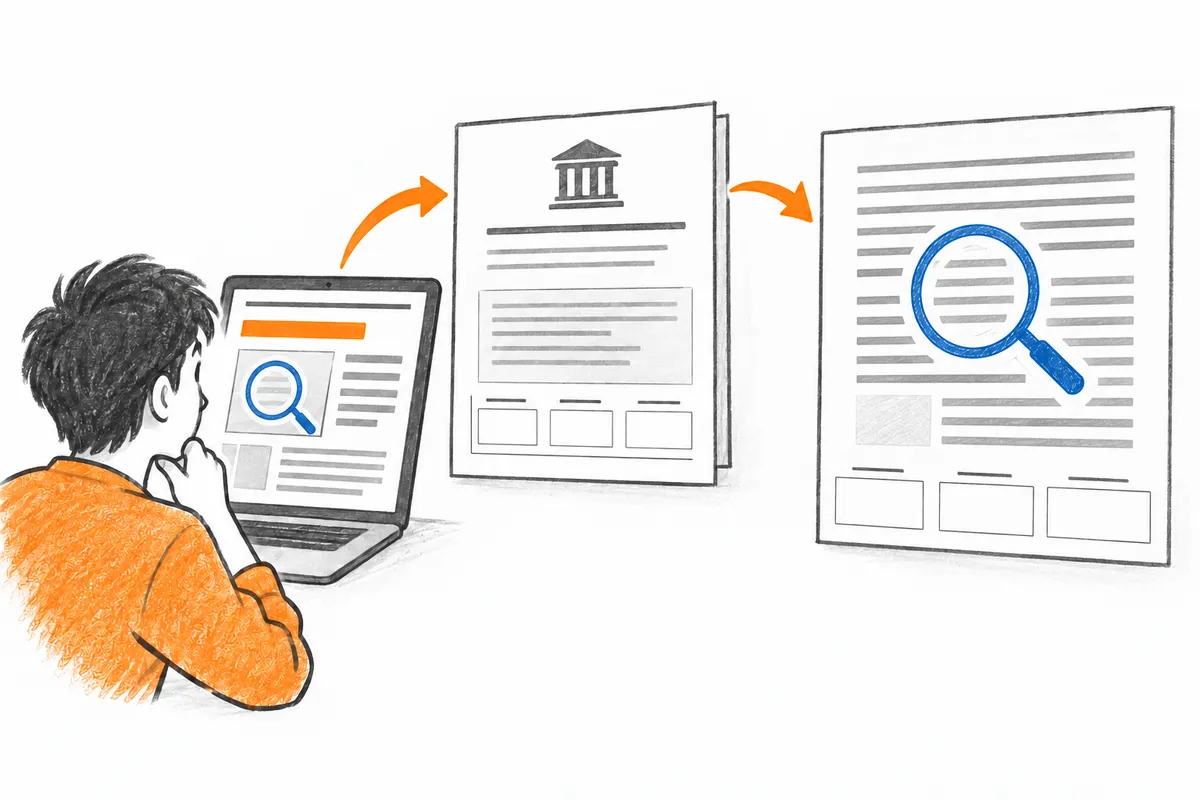
5. Write discovery and application prospects separately
The Academy connects the achievement with potential development of quantum cryptography, computing, and sensors. This supports reading the research's later significance. Current product performance and company launch dates require separate product and company evidence.
If a hypothetical article claims “this discovery makes all computers faster next year,” separate the award reason from that forecast. An officially announced achievement cannot establish that schedule or performance. Retaining future claims requires independent schedule and product evidence.
| Statement type | Source to examine | Appropriate wording |
| Award reason | Official award announcement | Confirmed object and core achievement |
| Experiment explanation | Announcement explanation and related research | Describe conditions and observations together |
| Application potential | Prospects section of official material | Separate possibilities from development prerequisites |
| Product launch and performance | Separate verification material for that product | Describe only the confirmed scope |
“May contribute to related technology” conveys different information from “multiplied current product performance.” Preserve that difference even in simple wording. Without verified values, do not add arbitrary multiples or speed comparisons. Application names are not performance measurements.
6. Build questions connecting press releases to research
After reading a release, experimental details may remain unknown. Ask which apparatus and methods were used, how results were compared, and how alternative explanations were examined. Seek detailed sources linked by the announcement or relevant originals for needed questions.
If additional material could not be opened, retain “detailed experimental conditions unverified.” A link's existence or a title does not mean its body was read. The main checked sources here are the two official announcements below; no claim is made of reviewing every detailed background document.
When comparing articles, determine whether they rephrase the same announcement or introduce additional research. Three articles citing one release help compare the award fact but do not triple experimental evidence. Separate source count from independent-evidence count.
7. A simple template for rewriting science news
Begin with award year, field, and core achievement. Next connect the object with the confirmed phenomenon, then explain why the research question matters. Treat potential applications separately, distinguishing current product information from future prospects.
You need not directly translate and copy every original explanation when shortening it. Summarize key facts concisely and explain difficult distinctions with your own examples and questions. Label hypothetical sentences and analogies so they do not merge with actual announcement content.
For example, notes can state “confirmed fact: two quantum phenomena in circuits,” “analogy: separated values,” “further check: apparatus details,” and “application question: separate product evidence needed.” Such notes distinguish evidenced content from reader questions during summarization.
8. Updating when a new announcement appears at publication
To add a new year's outcome, first actually open its official announcement. Compare laureates, field, announcement date, and reason with the original and record the new checking date. Do not transfer old examples as evidence for new announcements or fill unpublished outcomes with guessed names.
Without a verified new announcement, this article can explain original-source reading through the confirmed 2025 example. Make the example year clear in title and content. A recent publication date does not automatically change the research or award year discussed.
Separate updated facts from explanations in the revision record. If laureates and reasons change to a new official outcome, state that and recheck whether the general reading template fits. Check figures and tables for old-year information so the whole article stays consistent.
9. Final reader questions
Check whether the year and field match, the award reason was verified directly, observations and conditions are connected, analogies were not mistaken for reality, and prospects were distinguished from current performance. Leave unanswered questions unverified and read further sources.
This sequence applies to scientific announcements beyond Nobels. Clear explanations preserving objects and evidence help readers understand discoveries. Useful science reading clarifies relationships between fact, explanation, and outlook rather than eliminating every difficult term.
Official sources and writing standards
- NobelPrize.org: Nobel Prize in Physics 2025 — Press release
- Royal Swedish Academy of Sciences: The Nobel Prize in Physics 2025
References checked: 2026-10-06. This explanation was written with AI assistance based on official sources actually opened. Separately marked calculations, code, and checking examples are illustrative, not results from directly testing or measuring the user environment. Changes to features and official sources were rechecked during publication preparation.
Original illustrations created to help explain this article.
Original on Tistory ↗