Properties of the Elements: Mg (Magnesium)
This article was translated from its source language with AI assistance. Please check technical terms and equations against the original.
This post introduces general information about an element. The first element I would like to introduce is magnesium (Mg).
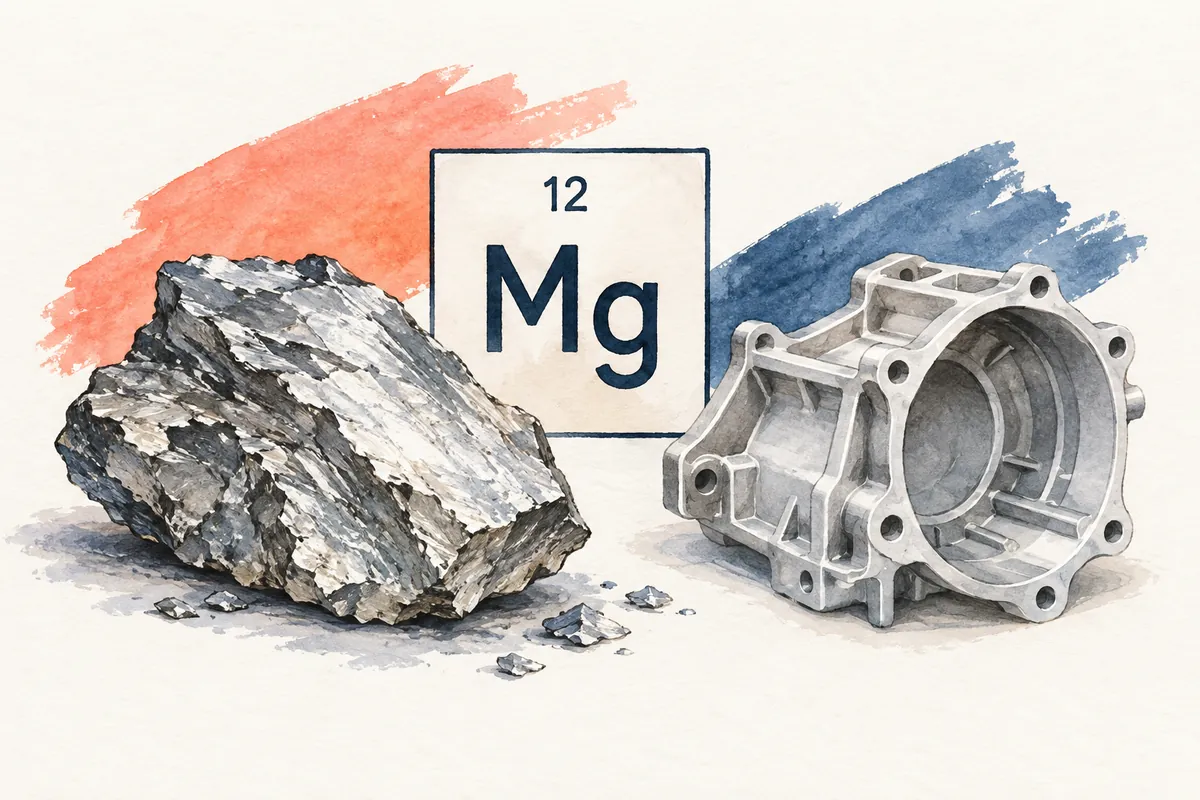
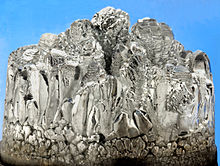
Magnesium(Mg): Basic Information
• Chemical element: Magnesium(Mg)
• Atomic number: 12
Magnesium(Mg): Characteristics
• State: Grayish-white metal at room temperature, Low density
• Chemical reactivity: High, Oxidation state +2
• Reaction: Readily reacts with air to form magnesium oxide
Production of Magnesium (Mg)
• Extraction methods: Extraction of magnesium salts from seawater or electrolytic processing
• Formation in Space: Formed in massive stars through successive addition of helium nuclei to carbon nuclei
• Occurrence on Earth: The fraction of Earth's mass is 13%., The fourth most common element on Earth
The Role of Magnesium (Mg) in the Human Body
• Occurrence: Its rank by mass in the human body is 11among the most common elements., Essential to all cells and approximately 300enzymes.
• Medical applications: Laxatives, Antacids, Agents for stabilizing nerve stimulation or vascular spasms, among other uses
Physical and Chemical Properties of Magnesium (Mg)
• Hardness: High
• Melting point: 923 K (650 °C)
• Boiling point: 1,363 K (1,090 °C)
• Discoloration: Slight discoloration upon exposure to air

• Oxide formation: MgO
Abundance of Magnesium (Mg) on Earth
• Earth: 8in the ranking of most abundant elements, Its share of the crystalline mass is 13% .
• Ocean: 3in the ranking of most abundant elements
Isotopes of Magnesium (Mg)
• Stable isotopes: 24Mg, 25Mg, 26Mg
• Radioactive isotopes: 28Mg
Global Production of Magnesium (Mg)
• Production volume: 2017as the reference year 1,100 kt
• Major producing countries: China, Russia
• Production method in China: Silicothermic reduction(Pidgeon process)
• Production methods in the United States: Dow process, YSZ process
Applications of Magnesium (Mg)
• Materials for implants absorbed by the body
• Magnesium alloys: Primarily calcium and zinc, Research also involves rare earth elements and silver
• Various uses: Fire starting, Flash photography, Fireworks, Automotive wheels, Beverage cans, Aircraft parts and similar products
That is an overview of magnesium.. That concludes this post..
References: https://en.wikipedia.org/wiki/Magnesium
Original illustrations created to help explain this article.
Original on Tistory ↗