Understanding Aluminum Oxide Films: Corrosion and Surface Treatment
This article was translated from its source language with AI assistance. Please check technical terms and equations against the original.
Aluminum products are often described as both having an oxide film and having surface treatment. Oxide on a surface alone does not identify the treatment or the environments in which required performance is achieved. Read material type together with treatment conditions.
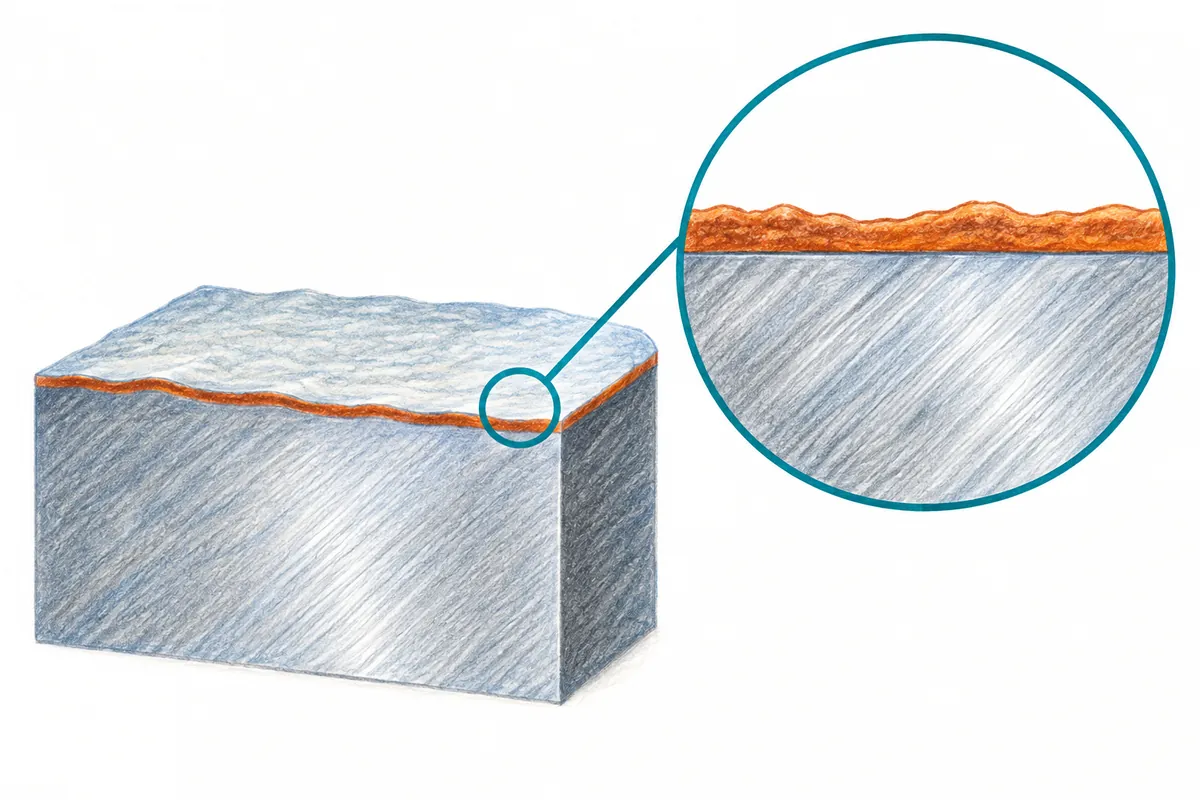
This introduction explains natural oxidation and anodizing. It is not a result of preparing actual specimens or performing corrosion tests. Dimensions and order cases are hypothetical illustrations, not recommended process conditions or guaranteed product life.
The sequence for checking aluminum surface-treatment information
1 → Check the substrate alloy and component use
2 → Distinguish natural surfaces from anodizing records
3 → Compare coloring, sealing, and film specifications
4 → Check service environment and performance-test conditions
5 → Record assembly dimensions, care methods, and unknown conditions
1. Distinguish natural oxidation from process-produced oxide films
The Aluminum Anodizers Council describes anodizing as controlling and enhancing naturally occurring oxidation. Oxide formation on aluminum and obtaining desired surface properties through a process are related. “Oxidized” does not make all surfaces identical.
Natural and specification-treated surfaces need different information. Examine storage and use for the former; material, pretreatment, processing, finishing, and inspection for the latter. Looking at a surface does not establish film thickness or process type.
Suppose two hypothetical silver-colored plates exist: one stored after machining, one clear-anodized. Similar colors do not establish the same surface state. Product specifications or manufacturing records are needed; appearance is one item to compare with them.
2. How anodizing creates the surface
AAC describes electrochemically transforming aluminum's surface into an oxide layer. The layer derives from the substrate, unlike applying a separate material such as paint. This explains the treatment relationship; it does not provide mixtures or work instructions for performing the process at home.
Specify treatment objectives: appearance and color, corrosion resistance, or wear conditions may require different specifications. Combining them into “good anodizing” makes order and inspection criteria ambiguous.
| Surface description | Information to check | What the term alone does not establish |
| Naturally oxidized surface | Storage/use conditions and actual surface state | Specifications of a process-controlled film |
| Anodized surface | Alloy, process, finishing, and inspection records | Life in every environment |
| Colored treatment | Color criteria and related conditions | Corrosion performance assessed from color alone |
| Separate coating such as paint | Coating and substrate-treatment specifications | The same formation method as anodizing |
These distinctions do not rank products. They organize evidence needed for actual use. A process name supports some explanation, but component performance requires its conditions and inspection results.
3. Read porosity together with sealing
AAC explains that the anodized layer's porous structure permits subsequent coloring and sealing. Separate film formation from finishing conditions. Sealing is information needed to understand performance; a stated color cannot replace it.
Sealing is not always the same choice. AAC technical material describes some hard-anodized layers used unsealed when wear properties matter because sealing can affect hardness characteristics. Link required performance to process specifications rather than applying one finishing rule universally.
An order stating only “black surface” may leave surface type, coloring, sealing, and intended use unclear. Confirm these separately with the maker and decide how performance will be evaluated. Record color confirmation separately from corrosion inspection.
4. Different alloys can yield different outcomes under the same treatment name
AAC specifications explain that alloying combinations affect anodizing response and appearance. Some copper-rich 2xxx alloys particularly require checking process control and suitable techniques. The broad name aluminum does not extend another alloy's treatment result unchanged.
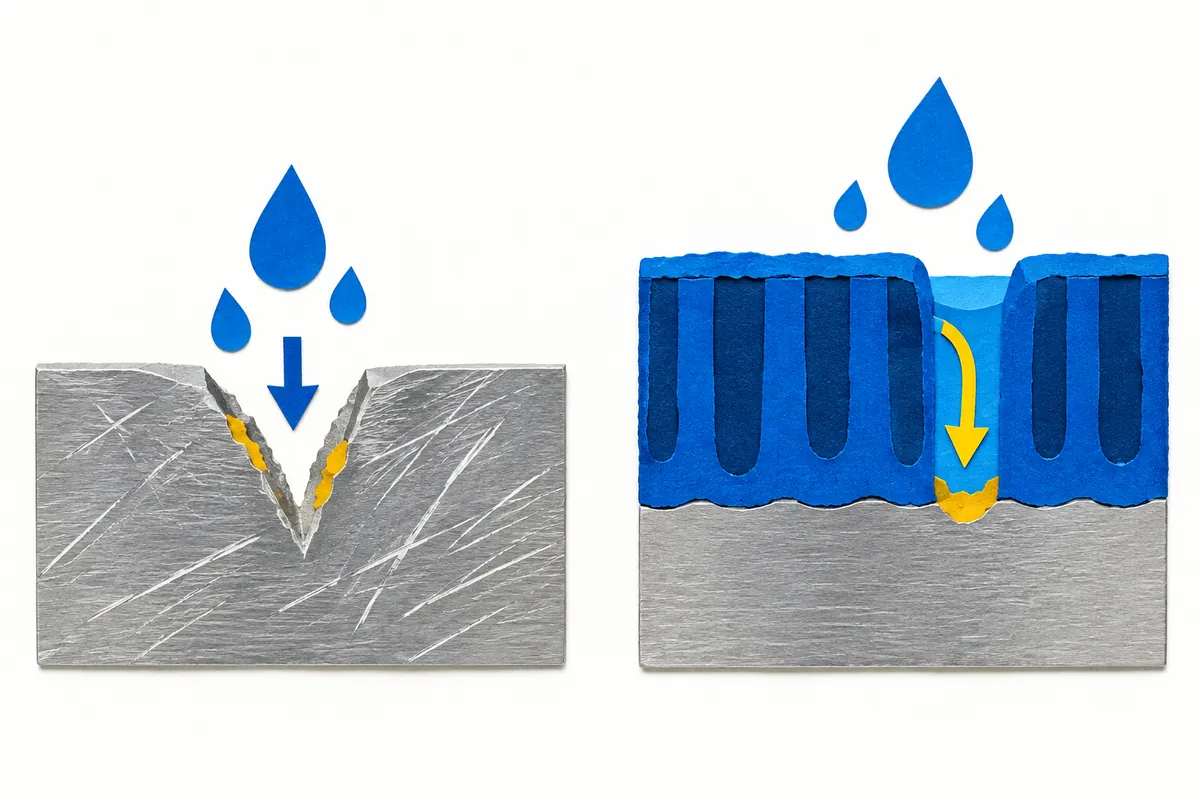
For components, confirm alloy number and condition and compare processing. If two alloys ordered with the same color look different, first inspect material and surface preparation. Without this, judging one supplier's process as failed or evaluating an entire alloy's performance is difficult.
Separate substrate and surface-layer roles too. Assess load and machining through material and geometry, and wear or corrosion through treatment specifications. A treatment name does not validate whole-component mechanical performance. Define tests according to actual use.
5. Preserve conditions when comparing corrosion performance
Read material, surface specification, test environment, duration, and decision criteria together. AAC also distinguishes tests and performance criteria. “Good corrosion resistance” must connect to results under identified conditions.
Suppose hypothetical A reports no abnormalities in one test and B records outdoor service. Do not rank them by durations alone: test and service conditions differ, so first identify which question each answers. Do not convert test hours to service years without evidence.
| Comparison item | Necessary record |
| Substrate material | Alloy, material condition, and component type |
| Surface specification | Treatment, film thickness, coloring, and sealing |
| Test conditions | Environment and actual duration |
| Decision criteria | Appearance, corrosion, or functional item evaluated |
| Applicability | Differences between test specimen and actual component |
For discoloration or spots, record photographs, location, and usage first. Appearance alone cannot determine product composition or corrosion mechanism. Rubbing them away can obscure the original state; document and evaluate according to care guidance.
6. An example relating film thickness to assembly dimensions
Distinguish total film thickness from growth beyond the original surface. A substrate-derived layer does not mean all its thickness is added outward. Actual growth requires process information and measurements.
This hypothetical example shows only dimensional arithmetic. Assume both inner surfaces of a hole move 10 micrometers toward its space. A 10.000 mm diameter decreases by 20 micrometers, or 0.020 mm, to 9.980 mm. This neither recommends nor measures a particular film thickness or growth ratio.
가정한 양쪽 변화 = 10 μm + 10 μm = 20 μm
단위 변환 = 20 μm = 0.020 mm
가상 처리 후 지름 = 10.000 mm - 0.020 mm = 9.980 mm
For an external shaft surface, the same type of assumption changes diameter in the opposite direction. Check mating surfaces, measurement stage, and required untreated regions. Specifying only a treatment name while omitting dimensional checks can give makers and users different criteria.
7. Practical questions for orders and care records
Separate alloy, use, desired appearance, needed surface performance, assembly dimensions, and inspections when ordering. Check different requirements for visible and contact faces. Reading proposed specifications and agreeing on actual component checks reduces ambiguous wording.
For care, inspect treatment records and manufacturer cleaning guidance. Before changing color or strong polishing, examine treatment state and purpose. This article tests no chemical or tool use; use actual product guidance for appropriate care.
When problems occur, record discovery time, location, environment, prior care, and actual surface state. Do not compare different-product photographs as identical-condition outcomes. Label inferred material or treatment conditions to allow later correction.
8. Organize the sequence for reading oxide-film information
First identify the actual alloy and treatment type. Then confirm coloring, sealing, and other conditions and connect service environment to required performance. For performance sources, read tests and decision scope; for assemblies, continue to dimensions before and after treatment.
Understanding treatment goes beyond memorizing names. Even equally silver-colored hypothetical parts require alloy, process, finishing, and service conditions for comparison. The illustrations show that information-checking sequence, not oxide micrographs or measured data.
If information is limited, separate the known treatment name from unknown conditions. Oxide presence is a starting point for understanding surfaces; component-specific corrosion performance requires its specifications and evidence. This improves descriptions, orders, and inspection records.
Official sources and writing standards
- Aluminum Anodizers Council: What is Anodizing?
- Aluminum Anodizers Council: Specifying Anodized Finishes on Aluminum
References checked: 2026-10-06. This explanation was written with AI assistance based on official sources actually opened. Separately marked calculations, code, and checking examples are illustrative, not results from directly testing or measuring the user environment. Changes to features and official sources were rechecked during publication preparation.
Original illustrations created to help explain this article.
Original on Tistory ↗