Checking Sources in Claude Search Answers: Do Links Support the Claims?
This article was translated from its source language with AI assistance. Please check technical terms and equations against the original.
Source numbers make Claude search answers easier to read, but a link's existence and its support for a statement need separate checks. Even on the same topic, documents about other countries, versions, or usage conditions may not apply directly to your question.
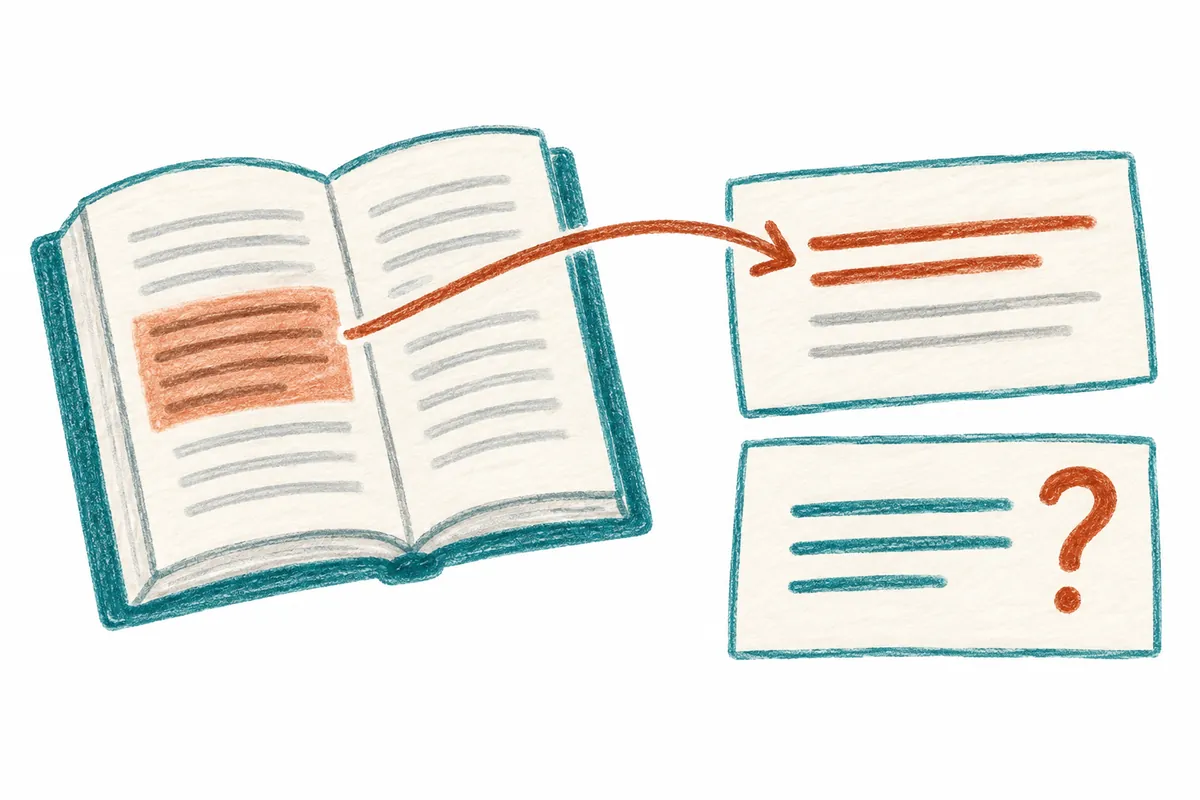
This procedure helps readers review search answers. It does not assume every Claude answer is wrong; compare necessary claims with originals first. Free features and service cases below are hypothetical, not actual prices or availability. No search feature or answer was tested in a real user account.
The sequence for checking search-answer sources
1 → Split answers into claims by target, date, and feature
2 → Actually open original links and identify documents
3 → Compare applicable conditions in relevant passages
4 → Record supported, partially verified, or unverified
5 → Revise within confirmed scope and recheck
1. Separate use of search from source review
Claude's official help describes search indicators, source links, and opening documents directly. It also says newer experiences lack a search toggle and can search when needed. Do not assume every account has a button in the same place; compare the current screen with guidance.
A search indicator starts verification. What matters is the material used and its fit to the claim. You can request “verify on the web and attach official links directly relevant to each key claim.” Requesting this alone does not establish that every link was opened and validated.
Anthropic explains providing direct sources for searched information so readers can check it. Help also advises cross-checking important information and consulting authoritative material. The worksheet below applies this review to everyday feature checks and writing.
2. Divide long answers into verifiable claims
“This feature is free for every user and immediately available in the latest version” contains several claims. Separate audience, pricing, version, and method to identify evidence. A link can support only part; do not mark the entire sentence verified at once.
| Hypothetical answer claim | Field to find in the original | If evidence is absent |
| Available to every user | Account, country, and rollout scope | Record only some conditions as verified |
| Free | Pricing and included scope | Leave price unverified |
| Available in the latest version | Version, date, and change history | State only the verified version |
| Runs through one button | Current official procedure | Record screen differences and unknown stages |
You need not review the entire answer immediately. Prioritize conditions that change decisions: actual availability for usage, announcement time for an article's date. Focusing claims reduces unnecessary lengthy reading.
3. Open links and identify the documents first
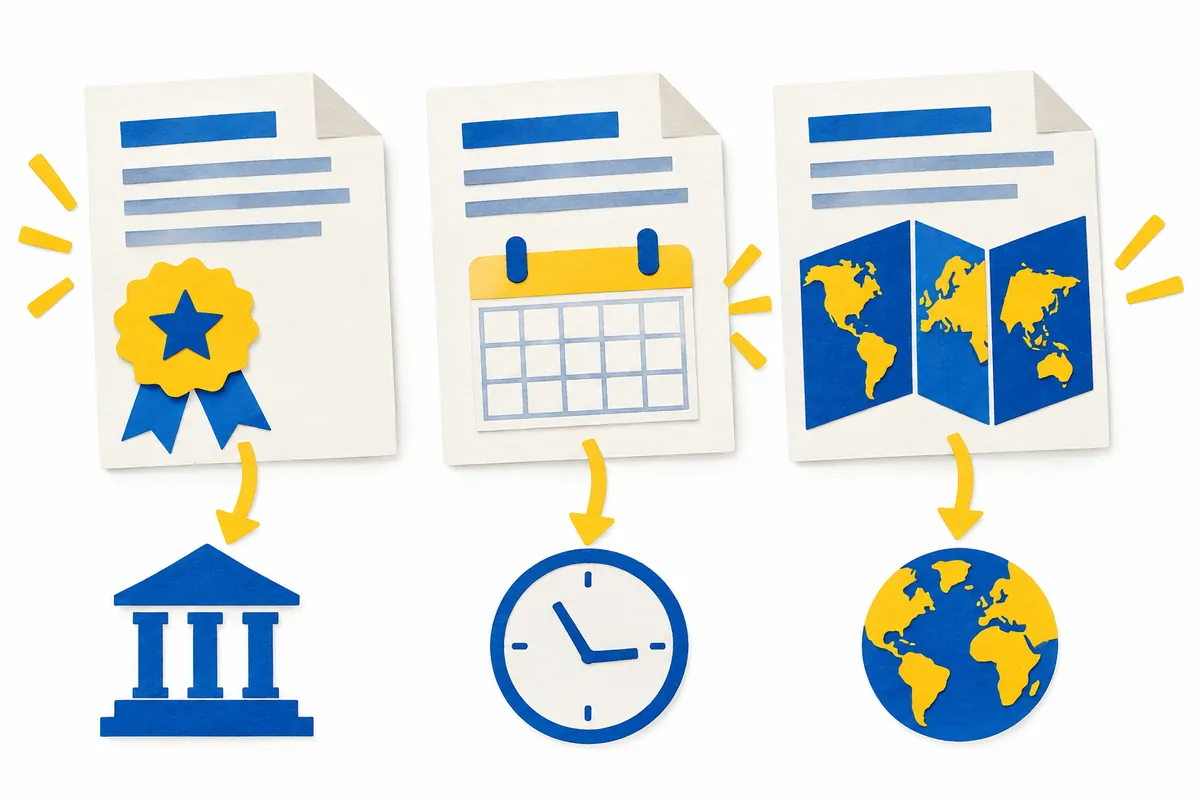
Read title, institution, date, and audience for each page. “Official website” alone is insufficient. Older-version documents, other regions, or other products from the same institution need separate relevance checks. Record whether the document actually opened.
Search snippets help locate originals but do not replace all conditions. A snippet can say “available” while the original specifies phased rollout to certain accounts. Read introductory and relevant sections together, checking whether extracted wording removed conditions.
If a link fails, seek the same document through another official route. Record the new address actually read, or leave it unverified. Plausible or repeatedly cited addresses do not establish checked contents. Access failure is also a review result.
4. Record claim-source relationships in three levels
Use supported for directly confirmed conditions, partially verified for some conditions, and unverified when relevant text is absent. This is a proposed worksheet, not a scoring method for inventing answer-accuracy percentages.
A hypothetical document saying “available to personal accounts in some regions” cannot sustain “every user.” Narrow the wording or leave the full scope unverified. Document existence and sentence correctness are distinct outcomes.
| Record | Condition | How to incorporate it |
| Supported | Target, time, and content directly match | State the conditions with the link |
| Partially verified | Core agrees but applicability differs | Narrow scope and explain the difference |
| Unverified | Original inaccessible or relevant evidence insufficient | Postpone definite wording |
For two sources attached to one sentence, identify each contribution. One may support a feature, another its launch date. More sources do not automatically mean more independent evidence; check sentence-level connections.
5. Handle documents with different dates and versions
Writing, update, and event dates differ. A recently revised page about an old announcement does not establish a recent first launch. Use current guidance for today's conditions and contemporaneous announcements for historical claims.
For conflicting official documents, first establish current applicability. Help may reflect changed conditions while an older introduction remains. A later date does not justify choosing guidance for another product. Retain unresolved differences as unverified manuscript items.
Record actual checking date and relevant document instead of only “as of today.” This enables later readers to trace when conditions were checked. This article's checking date concerns manuscript preparation, not prior verification of future publication-day features.
6. Specify evidence scope when asking Claude again
A review-based request is more useful than vague “make it accurate.” For overstated audience, provide the statement and official conditions together. Revision creates a new answer, which also needs checking.
Review the following answer claim by claim. Each row should state the claim, official document title and address actually checked, applicable audience and date, and evidence location. Mark unopened links and scope absent from originals unverified. Separate inference from source facts and rewrite partially verified sentences within confirmed conditions.
A subheading or information locating a passage can suffice as evidence location. Briefly summarize necessary conditions rather than copying lengthy originals. Do not attach a nonpricing source to price claims. Request evidence again or remove unsupported numbers.
7. Connect sources for numbers, tables, and images separately
Accurate prose links do not establish table numbers. Include units, periods, calculation methods, and example status. For multisource tables, identify sources row by row. Do not merge differently conditioned values as one measurement result.
Check whether searched images fit the subject: product screen versus concept diagram, version, and reuse conditions. Figures here are original illustrations of source review, not actual Claude search screenshots or copies of original figures.
Separate original numbers from your calculations. “Present in official material” differs from “calculated using it.” Retain formulas for readers, and label assumptions differing from the original.
8. A short prepublication checklist
Check that links were actually opened, directly support the claims, match dates and audiences, and label inference and examples. Narrow unchecked statements or retain unknown status. A filled worksheet does not establish unconditional correctness of all content.
Record changed claim, old and new wording, and evidence. For example, changing “every user” to “the accounts specified by the document” should explain the narrowed scope. This enables focused rechecks after conditions change.
Making search answers useful requires accurately connecting needed conditions rather than maximizing links. Dividing claims, opening originals, and writing within checked scope turns an AI summary into information readers can assess.
Official sources and writing standards
References checked: 2026-10-06. This explanation was written with AI assistance based on official sources actually opened. Separately marked calculations, code, and checking examples are illustrative, not results from directly testing or measuring the user environment. Changes to features and official sources were rechecked during publication preparation.
Original illustrations created to help explain this article.
Original on Tistory ↗