Meteoroid, Meteor, Meteorite: A Light in the Sky Is Not the Same as a Rock on the Ground
This article was translated from its source language with AI assistance. Please check technical terms and equations against the original.
A streak in the night sky often prompts the claim that a meteorite has fallen. Yet seeing light and confirming material on the ground are different observations. Separating meteoroids, meteors, and meteorites makes news photographs and observing notes easier to read accurately. Rather than merely memorizing names, ask where the material is and what was actually observed.
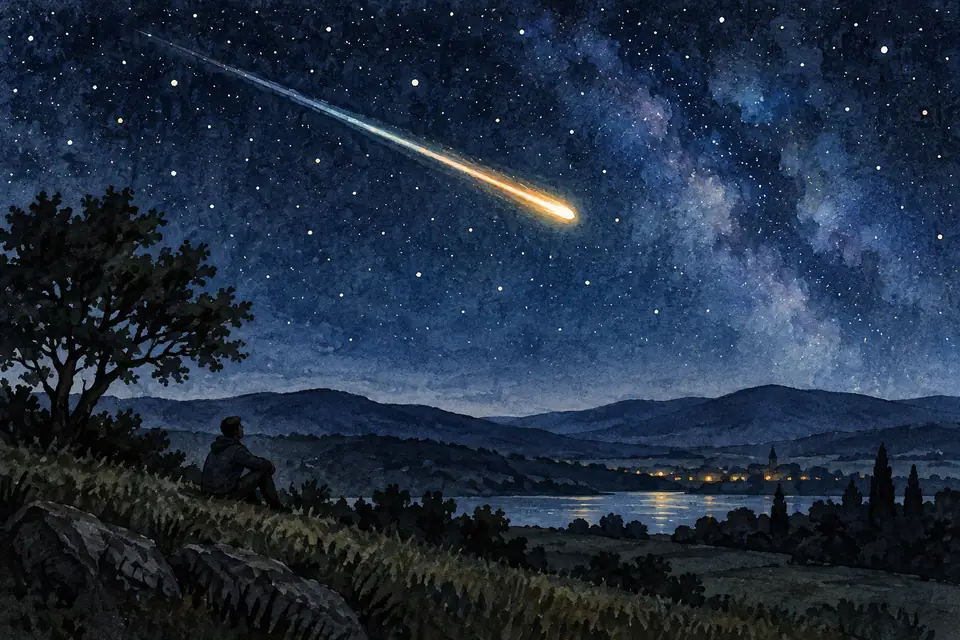
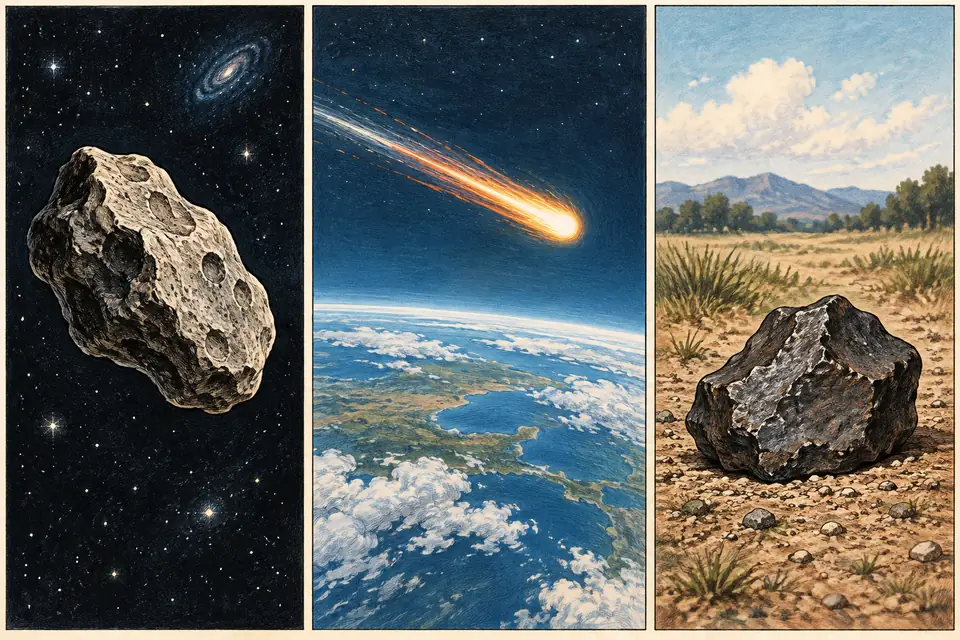
1. A meteoroid is in space; a meteor is the luminous event
A small solid object in space is a meteoroid. When it enters an atmosphere rapidly and produces a luminous streak, the observed phenomenon is a meteor, commonly called a shooting star. NASA's meteor and meteorite facts explain the terms. Despite the nickname, a distant star itself is not falling to Earth.
It helps to label the meteoroid as the object and the meteor as the light-producing atmospheric-entry event. “A bright line appeared in the sky” can support a meteor observation, but that sentence alone does not reveal the object's original size or composition. Avoiding an immediate leap from visible brightness to all material properties is a first step in careful observation.
2. Material reaching the ground is a meteorite
Material surviving the atmospheric passage and reaching the surface is a meteorite. Not every meteor leaves one: most small meteoroids disappear in the atmosphere. A flash therefore does not establish that a nearby stone belongs to the same event. NASA's space-rock guide also explains that most burn up before reaching the ground.
Consider a hypothetical example. You see a short eastern-sky flash at 21:10 and find a dark roadside stone the next day. The recordable facts are the flash's time and direction and the stone's location. Linking them requires additional evidence. Declaring a space origin from color or magnetic attraction alone is the same sort of premature inference.
3. A meteor shower does not mean stones piling up like rain
When Earth crosses a stream of particles in space, many meteors can appear during a particular period. Extending their trails backward makes them appear to spread from one direction in the sky, the radiant. NASA's space-flight basics explains the particle stream and radiant.
Multiple streaks in a meteor-shower photograph might show one scene, or might combine several exposures. Check the exposure duration and whether it is a composite. “The picture contains ten lines” and “ten meteors appeared simultaneously” are different statements. Reading the time span alongside an attractive visualization helps prevent exaggerating the observing experience.
4. A planned record makes even a short observation useful
Record the date and time zone, start and finish times, clouds, and viewing direction. Count only meteors you actually saw, and separate time away from the observing session. A difference between ten cloudy minutes and ten clear minutes cannot immediately be called a difference in meteor activity. Keeping the differing conditions makes comparison possible.
Use three columns: the object in space is a meteoroid, the light observed in the atmosphere is a meteor, and material reaching the surface is a meteorite. Write direct observations and inferred conclusions in separate sentences. This habit helps with astronomy, but also with event photographs, science news, and experimental results.
Original illustrations created to help explain this article.